StoryBrand
Why We Sell One Ingredient at a Time
Blends are easier to sell and easier to buy. Here is the argument for the harder option.
4 min read
Then is south. Vanam is forest. Twelve botanicals drawn from South Indian household practice, sold one ingredient at a time.
In short
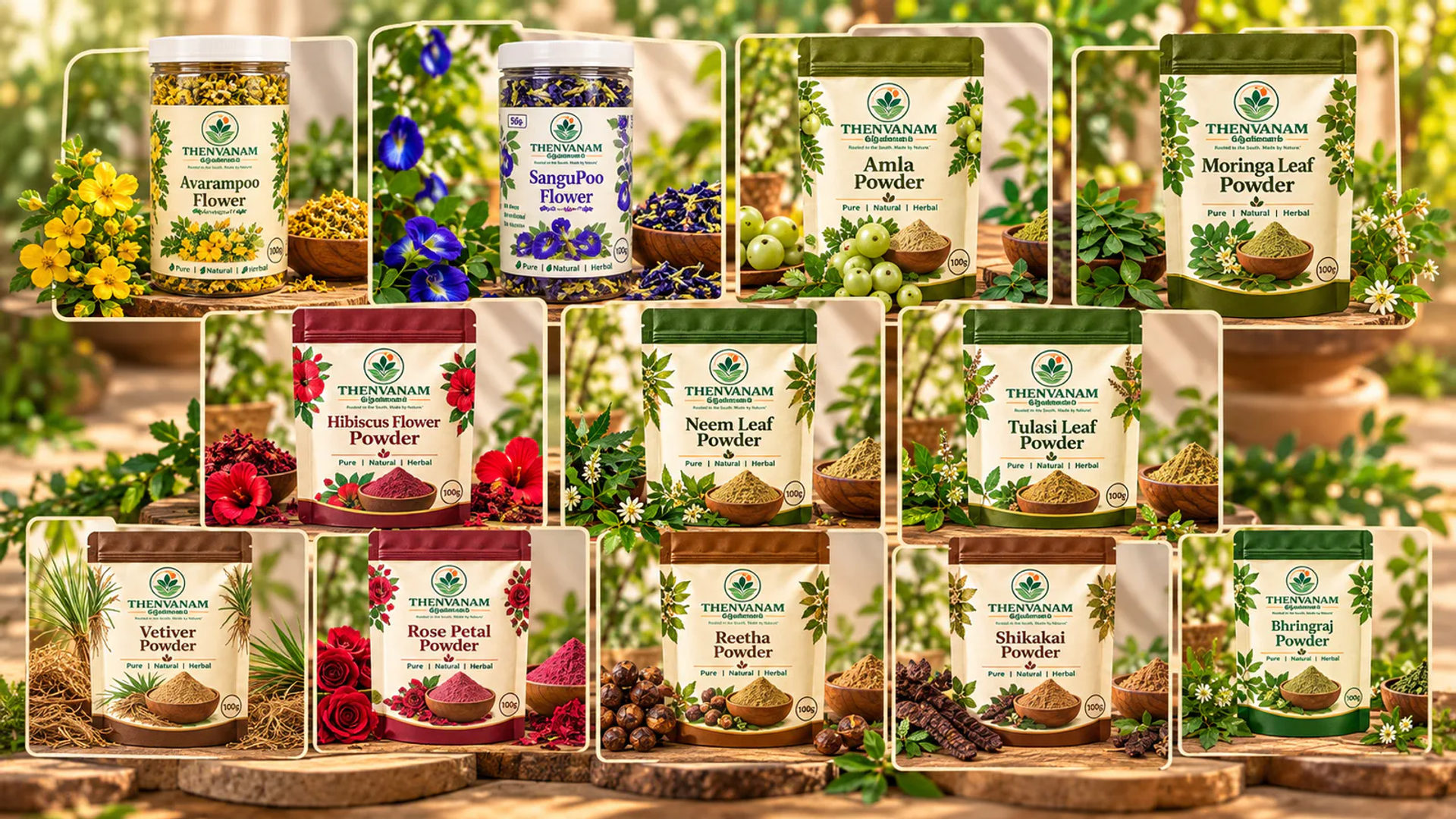
THENVANAM sells twelve single-ingredient botanicals from South India, each in its own pack — 100 g, except Sangu Poo at 50 g. Every product contains one named botanical and nothing else. Orders are placed on WhatsApp at +91 78450 21435, and delivered anywhere in India within 7 days.
Two of us spent years in a kind of job most people in tech will recognise immediately: long hours at a screen, meals eaten wherever was fastest, evenings spent in a rented room far from home. It was not a routine anyone chose for its health — it was simply how the work went, and almost everyone around us lived the same way. Little real food, less rest, and no particular reason to question either until something forced the question.
The COVID-19 pandemic forced it. Watching how much basic health and immunity suddenly mattered, and how little most of us — including two software developers who had not thought seriously about nutrition in years — had actually put into either, was hard to unsee afterwards.
What we came back to, once we started looking, was not a supplement aisle. It was Madurai, where we are from, and the botanicals households there have used for generations — moringa, shikakai, hibiscus, and others most of the country has never been offered as anything more than a footnote on a label.
We left software in 2025 to build THENVANAM around them: working with farmers to source each botanical, drying and packing it on its own, and delivering it anywhere in India. Not for people who already eat carefully, but for the people we used to be — sitting at a desk, living out of a PG, and assuming that was simply the cost of the job.
Then is south. Vanam is forest. Put together they describe what the range is drawn from — the botanical vocabulary of the southern peninsula, most of it grown, dried and used within a few hundred kilometres of where it started.
It is a deliberately narrow remit. There are botanicals in the world with better marketing and larger markets. These are the ones that belong here.
A traditional South Indian routine was never a product. It was a shelf — several powders, combined differently depending on the season, the person, and what was in the house. Nobody bought a “hair care system”.
Selling pre-mixed blends would be easier. It would also mean deciding, on your behalf, a set of proportions that a household would have adjusted constantly. We would rather sell the powders separately and write down honestly how they have traditionally been combined.
There is a particular register natural-products copy tends to fall into, and it involves saying a great deal about benefits without saying anything verifiable. We have tried to avoid it.
You will not find health claims on this site, or invented certifications, or testimonials from customers who do not exist. What you will find is the botanical name, the part of the plant used, the composition of the pack, and a description of how the ingredient has traditionally been prepared. Where a statement rests on traditional practice rather than evidence, the page says so.
You add products to a cart, press Proceed, and WhatsApp opens with your order written out — products, SKUs, quantities and total. A person reads it and replies about availability, delivery and payment.
That is a deliberate choice, not a gap waiting on a payment gateway. For a business this size, a conversation answers questions a form cannot.
Blends are easier to sell and easier to buy. Here is the argument for the harder option.
4 min read
Where the name came from, and why a business selling twelve botanicals bothers to write about plants at all.
5 min read