Moringa Powder Benefits: What It Is, What Is in It and How It Is Used
By THENVANAM Editorial ·
In short
Moringa powder is the dried, finely ground leaf of Moringa oleifera, the drumstick tree (murungai in Tamil, sahjan in Hindi). Moringa leaves are recorded in food composition tables as a source of protein, calcium, iron, vitamin C and beta-carotene. The practical advantage of the powder is that it keeps those leaves shelf-stable and easy to stir into everyday food. THENVANAM does not make health claims: research on moringa is still mostly small or laboratory studies, so treat it as a green leaf ingredient, not a remedy.

What moringa powder actually is
Moringa powder is made from the leaves of Moringa oleifera, the same tree that gives South Indian kitchens drumsticks (murungakkai). The leaves are dried and milled into a fine green powder. A good moringa leaf powder contains nothing else: no carrier, no colour, no flavouring.
The names cause some confusion. Moringa powder, moringa leaf powder, moringa tree powder and drumstick powder almost always describe the same thing: powdered leaf. Drumstick pods and moringa seeds are different parts of the tree and are not what is sold as moringa powder, so check the ingredients line if a pack is unclear.
Outside India the same leaf is known by other names too; in the Philippines, for example, it is malunggay.
Moringa in Hindi, Tamil and other Indian languages
Moringa grows across India, so almost every Indian language has its own name for it. In Hindi, moringa is sahjan (सहजन), also called munga or saijan, and moringa powder is sahjan patta powder: the dried leaves of the sahjan tree, ground fine.
हिंदी में: मोरिंगा को सहजन कहा जाता है। मोरिंगा पाउडर सहजन की सूखी पत्तियों को पीसकर बनाया जाता है। इसे थोड़ी मात्रा में स्मूदी, दलिया, सूप या आटे में मिलाया जाता है।
Whatever the name on the pack, check the ingredients line. It should name only Moringa oleifera leaves.
- Hindi: sahjan (सहजन), munga, saijan
- Tamil: murungai (முருங்கை); the leaves are murungai keerai
- Telugu: munaga; the leaves are munaga aaku
- Kannada: nugge; the leaves are nugge soppu
- Malayalam: muringa; the leaves are muringa ila
- Marathi: shevga
- Bengali: sajne
- Gujarati: saragvo
What is in moringa leaf
Published food composition data, including the Indian Food Composition Tables, list fresh moringa (drumstick) leaves as a source of protein, dietary fibre, calcium, iron, vitamin C and beta-carotene, the plant pigment the body can convert to vitamin A. This is why moringa leaf has long been cooked into everyday South Indian food such as poriyal, adai and rasam.
Two practical points matter when you read nutrition numbers online. First, drying removes water, so gram for gram a powder is more concentrated than the fresh leaf. But you also use far less of it: a teaspoon of powder is not a bowl of keerai. Second, some nutrients, vitamin C especially, are reduced by drying, heat, light and long storage. Figures published for fresh leaves cannot be copied across to a powder.
- Protein and dietary fibre
- Minerals including calcium and iron
- Vitamin C (lower in dried powder than in fresh leaf)
- Beta-carotene, which gives the leaf part of its colour
The real advantages of moringa powder
Most of what makes moringa powder useful comes from the powder form itself, not from any special property of the plant. Fresh murungai keerai has to be stripped from the stalks, washed and cooked within a day or two. The powder sits in a dry cupboard and goes straight into whatever you are already making.
That makes it a simple way to add a green leaf to food that would otherwise have none, such as a smoothie, a bowl of porridge or a dosa batter.
- Keeps for months when stored dry, sealed and away from light
- Available year-round, not just when fresh leaves are in season
- No stripping, washing or chopping
- Stirs into drinks, porridge, soups and batters in seconds
- A single-ingredient powder is easy to check: the label should say 100% moringa leaf
What the research does and does not say
You will find long lists of moringa benefits online, from blood sugar to weight loss to skin. Most of these draw on laboratory work, animal studies or small human trials. That research is interesting, but it is not strong enough to say that moringa powder treats, prevents or cures anything.
That is why THENVANAM describes moringa as a food ingredient with a long traditional history, not as a supplement with a promised effect. If you are pregnant or breastfeeding, taking medication (particularly for blood sugar, blood pressure or thyroid), or managing a health condition, speak to a qualified professional before adding moringa or any new ingredient to your diet.
How moringa powder is used
In the kitchen, the usual approach is a small amount stirred in towards the end of cooking, or into something that is not cooked at all. The flavour is distinctly green and builds quickly, so start with less than you think you need.
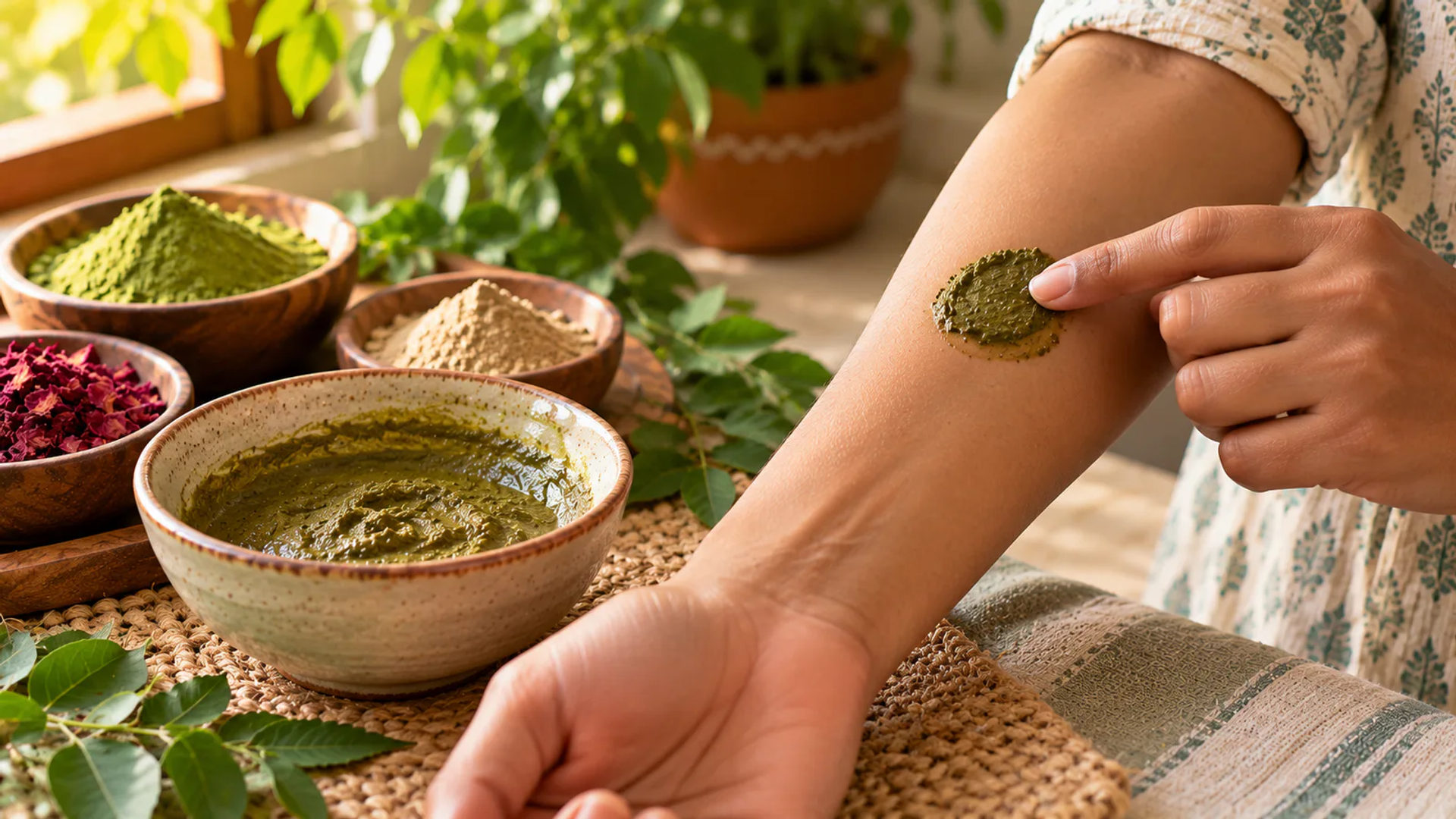
Moringa leaf powder is also mixed with a suitable natural base, such as water, aloe vera gel or yogurt, for external face and hair packs. Patch test first, as with any botanical you put on your skin.
- Smoothies: the easiest place to start, as fruit hides the grassy taste
- Porridge, kanji and upma: stir in just before serving
- Soups, dal and rasam: add off the heat
- Dosa, adai and chapati dough: mix into the batter or flour
- External packs: mix with water, aloe vera gel or yogurt into a paste
How much to use
Our product guidance says a small amount, and we mean it. Around half a teaspoon is a sensible place to begin in a drink or a bowl of food. Increase gradually only if you like the taste. More is not better, and a spoon of powder is not a replacement for vegetables or a meal.
Moringa is a leaf, and like other dark greens it can unsettle some stomachs at first, especially in larger amounts. Starting small lets you find out how it suits you.
Choosing and storing moringa powder
Good moringa leaf powder is a fresh, fairly bright green and smells like dried leaf. A dull olive or brownish colour usually means it has been exposed to light, heat or moisture. The ingredients line should name only moringa leaves.
Once open, keep the pack tightly closed in a cool, dark, dry place and always use a dry spoon. Humidity is the main enemy of any leaf powder, and steam from a stove is enough to make it clump.
Key takeaways
- Moringa powder is dried, ground leaf of Moringa oleifera, also sold as moringa tree powder or drumstick powder.
- Moringa leaves are recorded as a source of protein, calcium, iron, vitamin C and beta-carotene, though drying reduces some nutrients.
- Its main practical advantage is convenience: a shelf-stable green leaf you can add to everyday food.
- Health claims for moringa rest on early research. THENVANAM does not make them.
- Start with about half a teaspoon, and check with a professional if you are pregnant, on medication or managing a condition.
Frequently asked questions
What are the benefits of moringa powder?
Moringa leaves are recorded in food composition tables as a source of protein, calcium, iron, vitamin C and beta-carotene, and the powder makes that leaf easy to add to everyday food. Many further health benefits are claimed online, but the research behind them is still early, and THENVANAM does not make health claims.
Is moringa powder the same as drumstick powder?
Usually, yes. Both names normally describe powdered leaf of Moringa oleifera, the drumstick tree. Drumstick pods and seeds are different parts of the tree, so check the ingredients line if a pack is unclear.
What is moringa powder called in Hindi?
In Hindi, moringa is sahjan (सहजन), also called munga or saijan. Moringa powder is sahjan patta powder: dried sahjan leaves, ground fine.
What is moringa called in Tamil?
Murungai (முருங்கை). The leaves are murungai keerai and the pods, known in English as drumsticks, are murungakkai.
How much moringa powder should I take a day?
Treat it as a food ingredient rather than a dose. Around half a teaspoon in a drink or a bowl of food is a sensible start. Increase only gradually and only if it suits you. If you are pregnant, breastfeeding, on medication or managing a health condition, ask a qualified professional first.
Is moringa leaf powder as nutritious as fresh moringa leaves?
Not exactly. Drying concentrates some nutrients by removing water, but reduces others, especially vitamin C. You also eat much less powder than you would fresh leaf. Both are useful ways to bring moringa leaf into your food.
When is the best time to have moringa powder?
There is no special time. Most people simply add it to a meal or drink they already have, often a morning smoothie or porridge.
Can moringa powder be used on skin and hair?
Yes, externally it is mixed with a suitable natural base, such as water, aloe vera gel or yogurt, for face and hair packs. Patch test first and avoid contact with the eyes.
What this page is based on
Indian Food Composition Tables 2017 — National Institute of Nutrition (ICMR), Hyderabad
Nutrient composition of Indian foods, including drumstick (Moringa oleifera) leaves, measured on the raw edible portion. Values for a dried powder differ and vary with drying and storage.
Botanical nomenclature and regional plant names — THENVANAM Editorial
Botanical names are given in the accepted binomial form; Tamil and other regional names are recorded as they are used in South Indian households.
Documented South Indian household practice — THENVANAM Editorial
Descriptions of traditional use record how an ingredient has customarily been prepared and used. They are not statements of clinical effect and should not be read as health advice.
THENVANAM product specification — THENVANAM Sourcing
Composition, net quantity, SKU and usage guidance are taken from the current product specification for each pack.
About the author
THENVANAM Editorial · Product and content team
The THENVANAM editorial team documents what each botanical is, which part of the plant is used, and how it has traditionally been prepared in South Indian households. We describe traditional practice and product composition — we do not offer medical advice.
Shop the powders

Wellness
Moringa Leaf Powder
Single ingredientNo fillers or blendsShips in 7 days
Pure moringa leaf powder made from carefully dried moringa leaves, finely ground for everyday use.
100 g
Related reading

Moringa Powder Side Effects: Who Should Be Careful and Why
Moringa leaf has been eaten in Indian homes for generations, but that does not mean it suits everyone in every amount. Here are the side effects people report, who should check with a doctor first, and how to start safely.
5 min read
Using Moringa Powder in Everyday Food
Moringa leaf powder is one of the few in the range described for food. Where to add it, when to add it, and why the timing matters.
5 min read
Moringa Morning Smoothie
A small amount of moringa leaf powder, banana for body, and enough fruit to carry the green.
3 min read

Storing Botanical Powders in a Humid Climate
Coastal South India is not a kind place to store a dry powder. A few small habits make the difference between a pack that lasts and one that clumps in a month.
4 min read
How to Patch Test a Botanical Powder
Four steps, done once per powder. The reason single-ingredient powders are worth buying is the same reason a patch test is straightforward.
4 min read