
Moringa Powder Side Effects: Who Should Be Careful and Why
By THENVANAM Editorial ·
In short
Moringa leaf powder is eaten as a food in many Indian homes, and in small food amounts it is generally well tolerated. The side effects most often reported are digestive: loose stools, gas or an upset stomach, usually after larger amounts. People who are pregnant, breastfeeding, taking medicine for blood sugar, blood pressure or thyroid, or managing a health condition should ask a doctor before using it. Moringa root and bark are a different matter and should not be eaten; moringa powder should be made from the leaf only.

Is moringa powder safe?
Moringa leaves have been cooked into everyday South Indian food, such as poriyal, adai and rasam, for generations. As a food ingredient used in modest amounts, moringa leaf is generally well tolerated by most people.
Problems tend to come from two places: taking much larger amounts than anyone would eat as food, often because of supplement-style marketing, and particular situations such as pregnancy or regular medication, where any new concentrated ingredient deserves a doctor's view first. Moringa leaf powder is concentrated: drying removes the water, so a spoonful of powder holds far more leaf than a spoonful of fresh greens.
Common side effects
Most reported side effects are mild and digestive, and they usually come from starting with too much. Moringa is a fibrous dark leaf, and like other greens it can unsettle a stomach that is not used to it.
- Loose stools or a laxative effect, especially with larger amounts
- Gas, bloating or stomach discomfort
- Nausea, particularly when taken on an empty stomach
- A strong, grassy or bitter taste that some people find hard to take
Who should check with a doctor first
In these situations, ask a qualified doctor before adding moringa powder to your diet, even in small amounts.
- Pregnancy: moringa root and bark have traditionally been associated with uterine effects. Leaf eaten as food is different, but concentrated powder in pregnancy is a question for your doctor.
- Breastfeeding: moringa leaf is traditionally given to new mothers in some communities, but ask your doctor before using a concentrated powder.
- Medicine for blood sugar or blood pressure: some studies suggest moringa may lower blood sugar and blood pressure, which could add to the effect of these medicines.
- Thyroid medicine: health references advise caution with moringa alongside levothyroxine.
- Any regular medication, a chronic condition, or a planned surgery.
Leaf, root and bark are not the same
Many side-effect warnings online are about the root or bark of the moringa tree, not the leaf. The root and bark contain compounds that make them unsuitable to eat, and they should not be used at home.
Moringa powder for food should be made from the leaf alone. Check the ingredients line: THENVANAM Moringa Leaf Powder is 100% Moringa oleifera leaves, with nothing else added.
Side effects on skin and hair
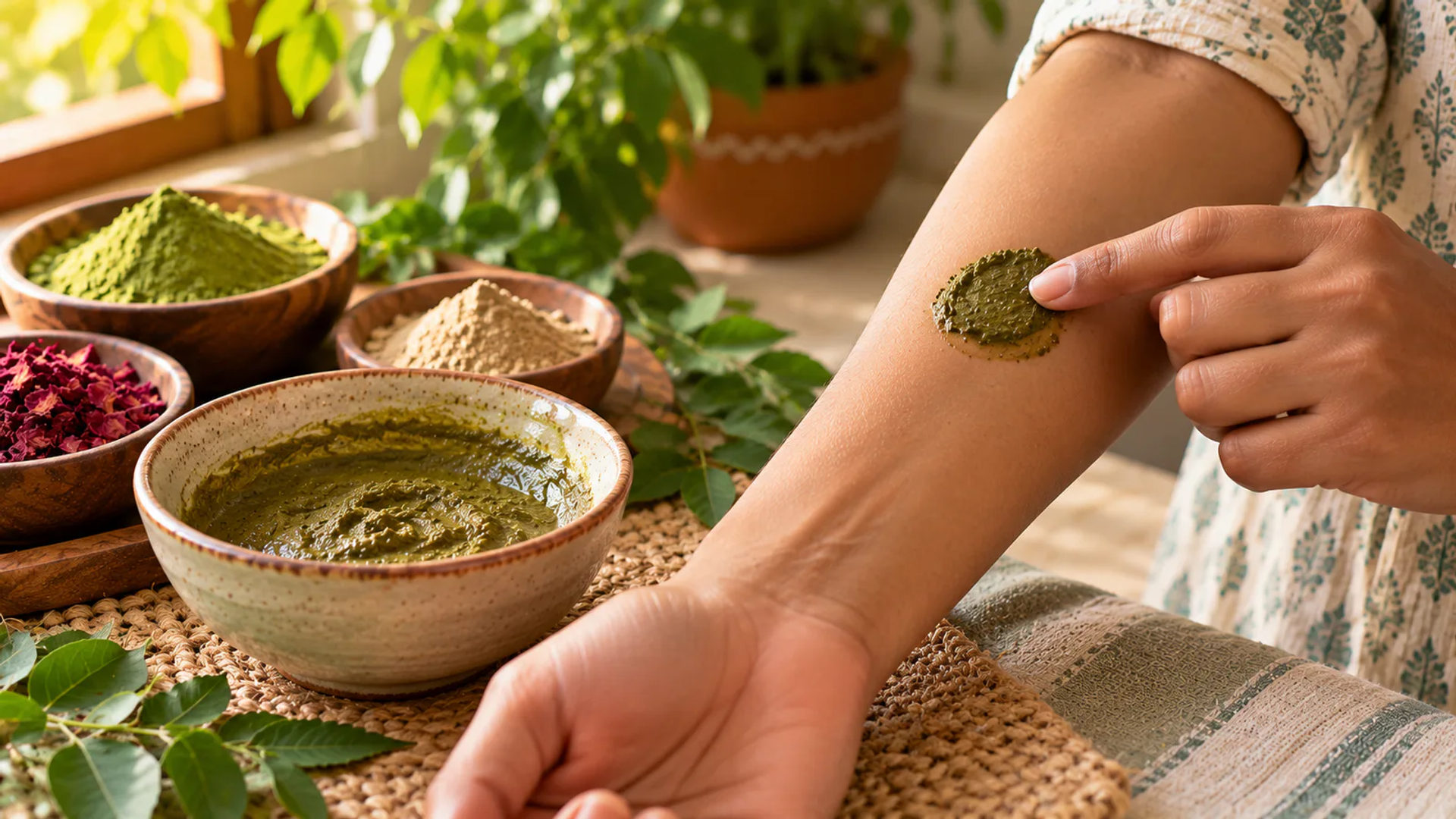
Used externally in a face or hair pack, moringa powder can irritate sensitive skin, like any botanical. Patch test a small amount mixed with your chosen base on the inner arm and wait before applying it more widely. Keep it away from the eyes, and rinse it off straight away if it stings or itches.
How to start safely
Treat moringa as a food, not a supplement. Begin with about half a teaspoon stirred into a meal or drink rather than on its own, and increase only gradually, and only if it suits you. There is no need for large amounts.
Stop and speak to a doctor if you have persistent stomach upset, a rash, itching, swelling, dizziness or any reaction that worries you.
- Start with about half a teaspoon
- Take it with food, not on an empty stomach
- Increase slowly, if at all
- Use leaf powder only, from a pack that lists a single ingredient
- Store it sealed, dry and away from light, and discard powder that smells musty or has clumped with moisture
Key takeaways
- In food amounts, moringa leaf is generally well tolerated; most side effects are digestive and come from larger amounts.
- Ask a doctor first if you are pregnant, breastfeeding, on medicine for blood sugar, blood pressure or thyroid, or managing a condition.
- Moringa root and bark should not be eaten; use leaf powder only.
- Start with about half a teaspoon, taken with food.
- Patch test before using moringa on skin or hair.
Frequently asked questions
What are the side effects of moringa powder?
The most common are digestive: loose stools, gas, bloating or nausea, usually after larger amounts or on an empty stomach. Starting small and taking it with food helps. Stop and see a doctor if a reaction persists or worries you.
Can I take moringa powder every day?
Many people add a small amount to food daily, as they would any leafy green. Keep the amount modest, and ask a doctor first if you are pregnant, breastfeeding, on regular medication or managing a health condition.
Is moringa safe during pregnancy?
Ask your doctor before using moringa powder during pregnancy. Moringa root and bark are traditionally associated with uterine effects, and a concentrated powder is not the same as the leaf cooked as food.
Does moringa interact with medicines?
It may. Some studies suggest moringa can lower blood sugar and blood pressure, and health references advise caution alongside thyroid medicine. If you take any regular medication, check with your doctor first.
Can moringa powder cause loose motions?
Yes, particularly in larger amounts. Moringa leaf is fibrous and can have a laxative effect. Reduce the amount, take it with food, or stop if it continues.
Are moringa leaf powder and moringa oleifera powder the same?
Usually, yes. Moringa oleifera is the botanical name of the tree, and moringa powder is normally made from its leaves. Check the ingredients line to make sure the powder is leaf only, not root or bark.
What this page is based on
Botanical nomenclature and regional plant names — THENVANAM Editorial
Botanical names are given in the accepted binomial form; Tamil and other regional names are recorded as they are used in South Indian households.
Documented South Indian household practice — THENVANAM Editorial
Descriptions of traditional use record how an ingredient has customarily been prepared and used. They are not statements of clinical effect and should not be read as health advice.
THENVANAM product specification — THENVANAM Sourcing
Composition, net quantity, SKU and usage guidance are taken from the current product specification for each pack.
About the author
THENVANAM Editorial · Product and content team
The THENVANAM editorial team documents what each botanical is, which part of the plant is used, and how it has traditionally been prepared in South Indian households. We describe traditional practice and product composition — we do not offer medical advice.
Shop the powders

Wellness
Moringa Leaf Powder
Single ingredientNo fillers or blendsShips in 7 days
Pure moringa leaf powder made from carefully dried moringa leaves, finely ground for everyday use.
100 g
Related reading

Moringa Powder Benefits: What It Is, What Is in It and How It Is Used
Moringa powder is dried, ground leaf of the drumstick tree. Here is what is actually in it, what the powder form genuinely does well, what the research does and does not say, and how it is used at home.
7 min read
Using Moringa Powder in Everyday Food
Moringa leaf powder is one of the few in the range described for food. Where to add it, when to add it, and why the timing matters.
5 min read
How to Patch Test a Botanical Powder
Four steps, done once per powder. The reason single-ingredient powders are worth buying is the same reason a patch test is straightforward.
4 min read

Storing Botanical Powders in a Humid Climate
Coastal South India is not a kind place to store a dry powder. A few small habits make the difference between a pack that lasts and one that clumps in a month.
4 min read