
How to Patch Test a Botanical Powder
By THENVANAM Editorial · ·
In short
To patch test a botanical powder: mix a small amount with the base you intend to use, apply it to a small area of skin, wait, then check the area before using the powder more widely. Test one powder at a time so you know what caused any reaction.
Steps
Mix a small amount
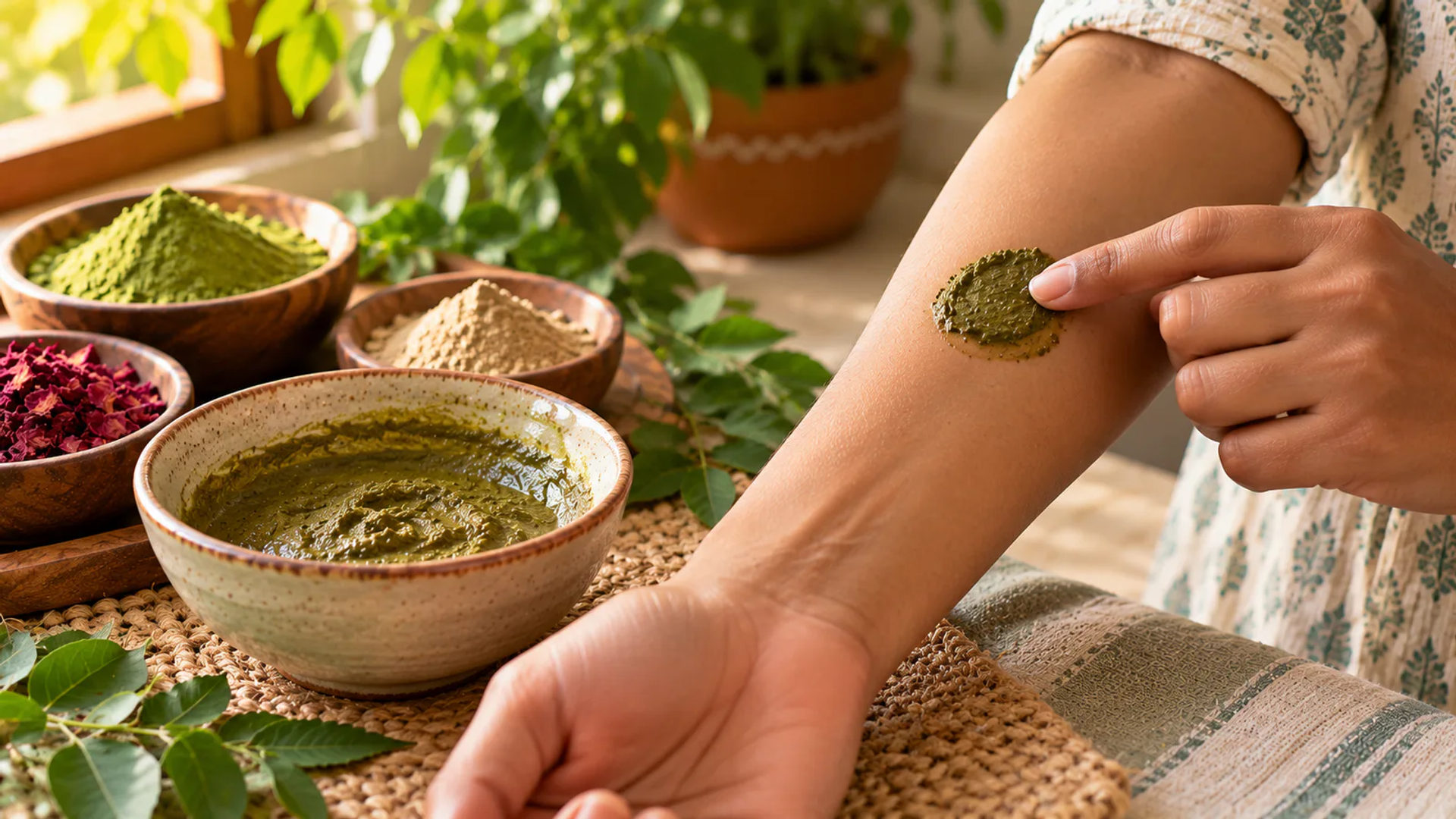
Take a pinch of the powder and mix it with the base you intend to use — water, aloe vera gel or yogurt — into a small quantity of paste.
Apply to a small area
Apply to a small area of skin, away from the eyes. The inner forearm is a convenient place.
Wait
Leave the test area alone and give it time before you make a judgement. Do not apply the powder anywhere else in the meantime.
Check before wider use
Check the area. If there is any irritation, do not use the powder. If there is none, you can proceed with normal use.
Why one powder at a time
If you test a three-powder blend and react to it, you have learned that you react to the blend — which tells you nothing useful about which of the three to avoid. Testing individually takes longer and is the only version that produces an answer.
This is one of the practical arguments for single-ingredient powders over pre-mixed products: you can isolate the variable.
Test in the base you will use
A powder mixed with water and the same powder mixed with yogurt are not identical preparations. If you plan to use yogurt, test with yogurt.
Which powders carry an explicit note
Several THENVANAM products carry a patch-test instruction directly in their usage guidance: neem, hibiscus and rose petal among them. The absence of a note on another product is not a reason to skip the test — it is sensible practice before any new topical preparation.
Key takeaways
- Test one powder at a time, or you will not know what caused a reaction.
- Test in the same base you plan to use.
- Several products carry an explicit patch-test note; treat it as standard for all of them.
- Discontinue use if irritation occurs.
Frequently asked questions
Do I need to patch test every powder?
Patch testing is sensible before any new topical preparation, and several THENVANAM products carry an explicit note to do so.
Can I patch test a mixture?
You can, but if you react you will not know which ingredient was responsible. Testing individually is more informative.
What if I react to a powder?
Discontinue use. Do not apply it more widely.
What this page is based on
THENVANAM product specification — THENVANAM Sourcing
Composition, net quantity, SKU and usage guidance are taken from the current product specification for each pack.
About the author
THENVANAM Editorial · Product and content team
The THENVANAM editorial team documents what each botanical is, which part of the plant is used, and how it has traditionally been prepared in South Indian households. We describe traditional practice and product composition — we do not offer medical advice.
Shop the powders

Hair & Skin Care
Neem Leaf Powder
Single ingredientNo fillers or blendsShips in 7 days
Pure dried neem leaf powder for traditional skin and personal-care preparations.
100 g

Hair & Skin Care
Hibiscus Flower Powder
Single ingredientNo fillers or blendsShips in 7 days
Finely powdered hibiscus flowers traditionally used in natural hair and beauty routines.
100 g

Skin Care & Beauty
Rose Petal Powder
Single ingredientNo fillers or blendsShips in 7 days
Finely powdered dried rose petals for traditional natural beauty preparations.
100 g
Related reading
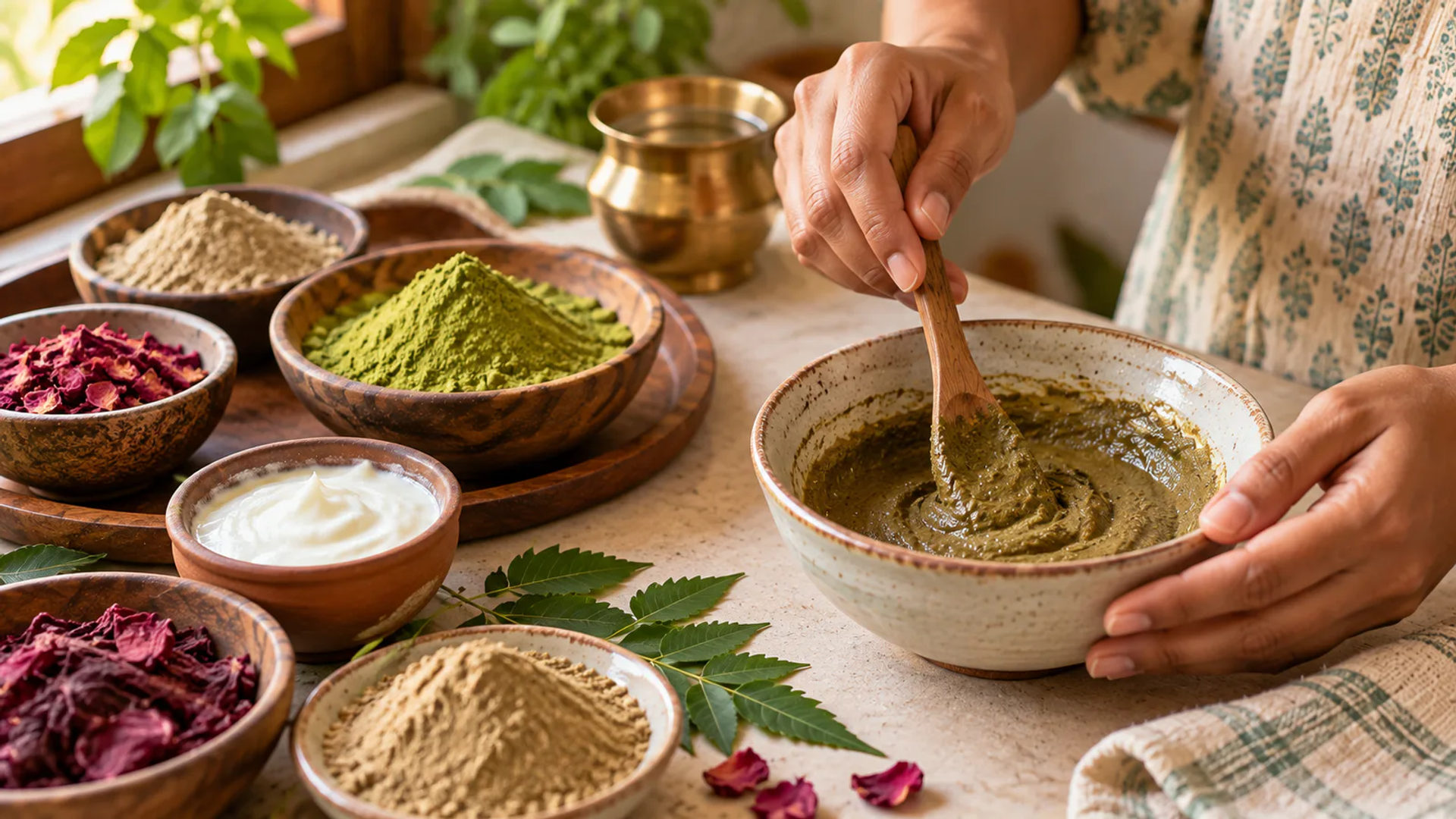
Making Your First Traditional Face Pack
Rose petal, a base and a patch test. The five steps that turn a jar of powder into a pack you can actually use.
5 min read

Choosing a Base for a Face Pack: Water, Aloe or Yogurt
Every traditional pack recipe ends the same way — "mix with a suitable natural base". Which base you choose changes the consistency, the drying time and how the pack comes off.
5 min read