
Shikakai vs Reetha: What Is the Difference?
By THENVANAM Editorial · ·
In short
Shikakai and reetha are two different plants. Shikakai is the pod of Acacia concinna, and reetha is the fruit of Sapindus species (the soapnut). Both have traditionally been used as natural hair-cleansing ingredients, but only reetha contains the natural saponins that produce foam.

They are two different plants
The most common confusion is treating these as two names for roughly the same thing. They are not. Shikakai comes from a climbing shrub, Acacia concinna, and it is the pod that is dried and ground. Reetha is the soapnut — the fruit of trees in the Sapindus genus.
Because the plant part differs, so does the powder. Shikakai powder is slightly gritty; reetha is denser.
Only reetha foams
If you are expecting lather, reetha is the one that will give you any. The shell of the soapnut contains natural saponins, which is exactly why it acquired the name. Shikakai does not lather in the way a modern surfactant shampoo does.
This is worth knowing before the first wash, because the absence of foam is often mistaken for the powder not working. It is simply a different mechanism.
How each is prepared
The preparation is broadly the same for both: mix the powder with water into a smooth paste, apply to wet hair and scalp, and rinse thoroughly. What varies is how much water each powder takes before it reaches a workable consistency.
- Shikakai — mix with water to a smooth paste, apply to wet hair and scalp, rinse thoroughly.
- Reetha — mix with water to prepare a paste or cleansing preparation. Avoid contact with the eyes.
Which one should you start with?
Shikakai is the more widely used of the two and the easiest starting point. Reetha is frequently used alongside it rather than instead of it.
There is no need to buy both at once. One 100 g pack is enough to find out whether a traditional wash suits your hair before you extend the shelf.
Key takeaways
- Shikakai is a pod, reetha is a fruit — two distinct plants.
- Reetha is the one of the two that produces natural foam.
- Both are prepared the same basic way: mixed with water into a paste, applied to wet hair, rinsed thoroughly.
- Shikakai is the usual starting point.
Frequently asked questions
Can I mix shikakai and reetha together?
Traditional routines often use the two together. Mix only what you need for a single wash so the paste is prepared fresh.
Why does my hair not lather with shikakai?
Shikakai does not lather the way a modern surfactant shampoo does. Reetha is the ingredient in this pair that produces natural foam.
What this page is based on
Botanical nomenclature and regional plant names — THENVANAM Editorial
Botanical names are given in the accepted binomial form; Tamil and other regional names are recorded as they are used in South Indian households.
Documented South Indian household practice — THENVANAM Editorial
Descriptions of traditional use record how an ingredient has customarily been prepared and used. They are not statements of clinical effect and should not be read as health advice.
About the author
THENVANAM Editorial · Product and content team
The THENVANAM editorial team documents what each botanical is, which part of the plant is used, and how it has traditionally been prepared in South Indian households. We describe traditional practice and product composition — we do not offer medical advice.
Shop the powders

Hair Care
Shikakai Powder
Single ingredientNo fillers or blendsShips in 7 days
Traditional shikakai pod powder for natural hair-care routines.
100 g
Hair Care
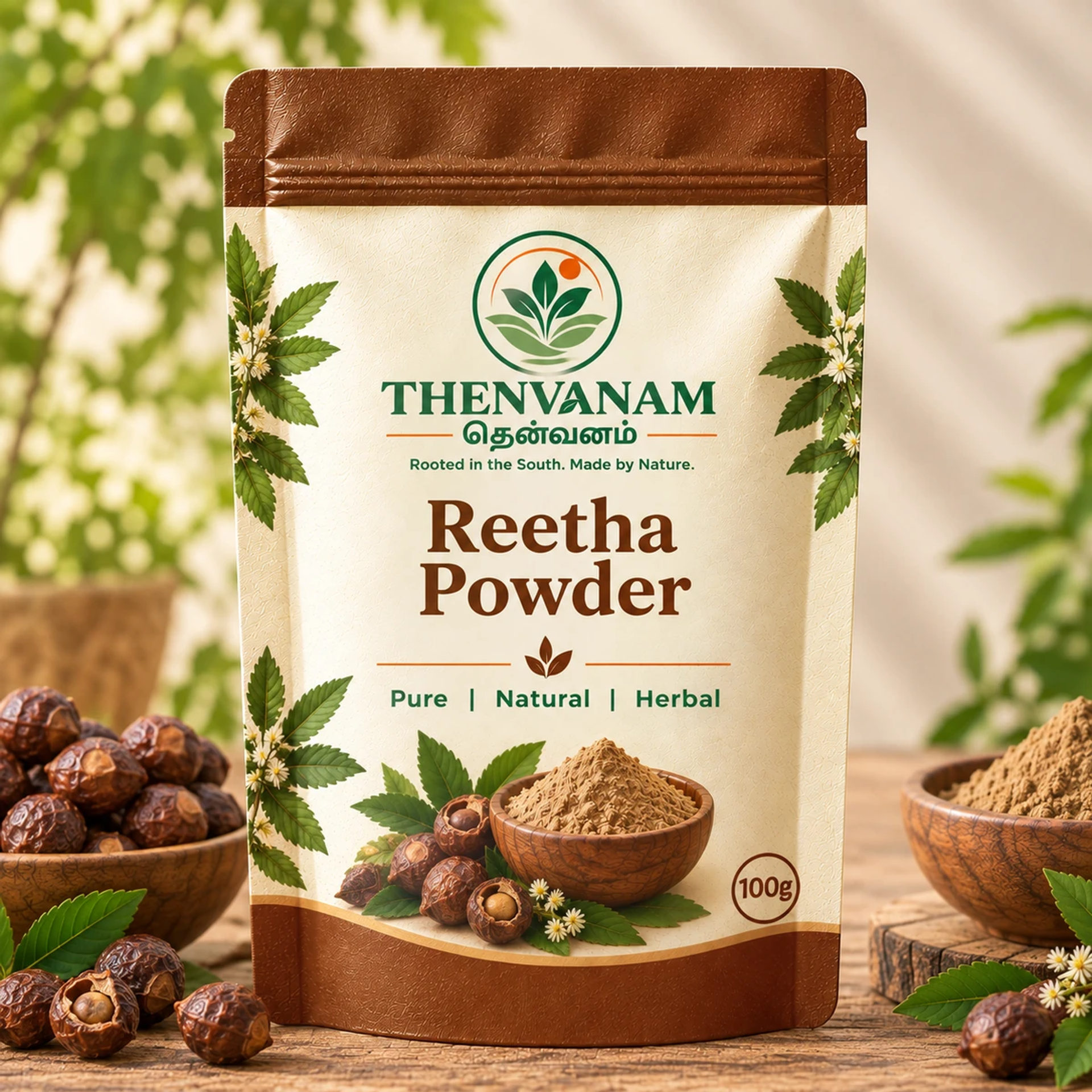
Reetha Powder
Single ingredientNo fillers or blendsShips in 7 days
Finely ground reetha powder traditionally used as a natural cleansing ingredient.
100 g
Related reading
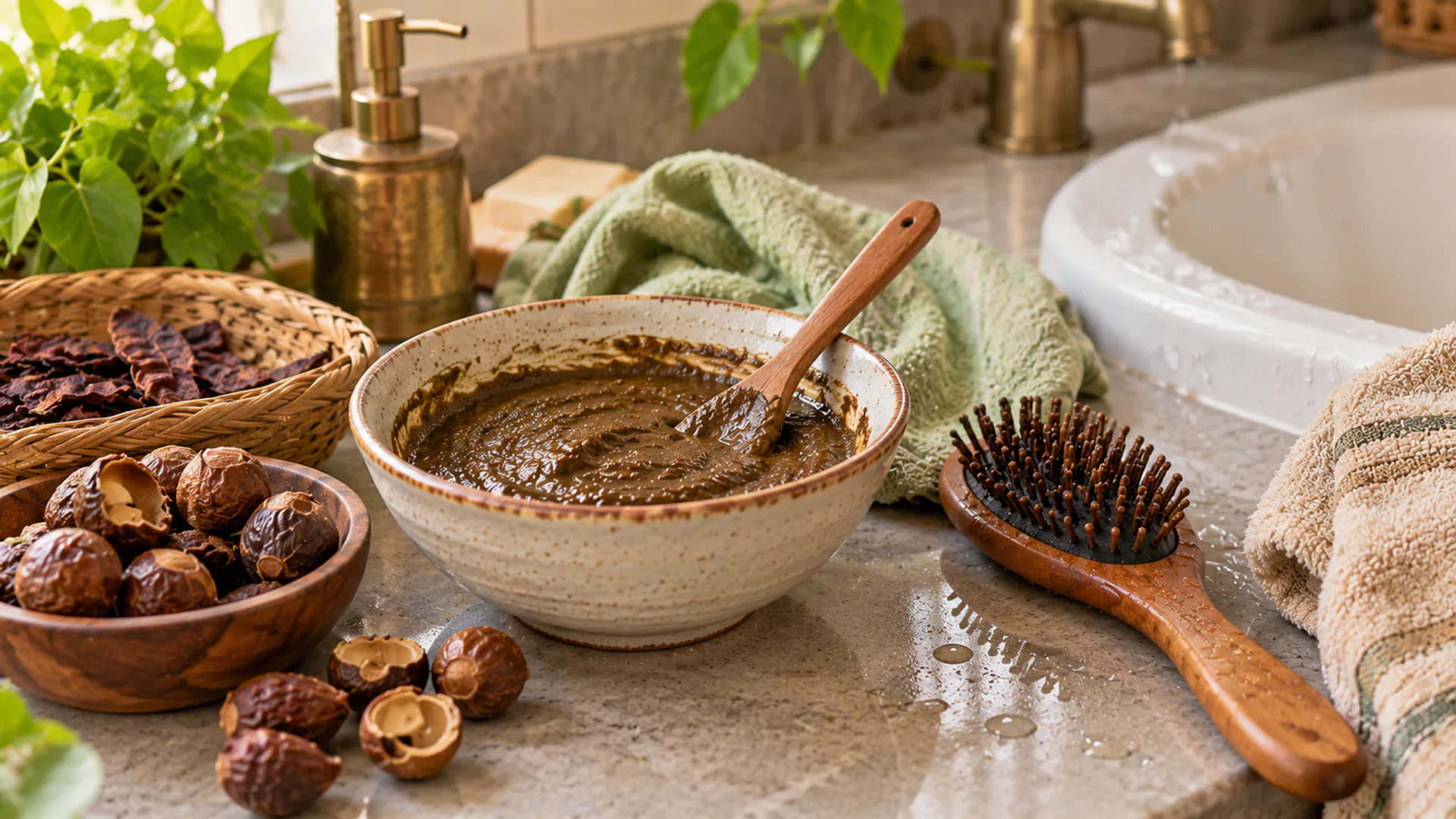
How to Wash Your Hair with Traditional Powders
A step-by-step walk through a traditional powder hair wash — how much to mix, how to apply it and how to rinse it out properly.
6 min read

Shikakai and Reetha Hair Wash Paste
The standard traditional pairing — the cleansing pod and the foaming soapnut, mixed fresh with water.
3 min read