
How to Use Tulasi Powder: Making an External Pack
By THENVANAM Editorial ·
In short
To use tulasi leaf powder externally: patch test first, then combine the powder with a suitable base such as water, aloe vera gel or yogurt into a smooth paste. Apply an even layer to clean skin on the face or body, keeping clear of the eyes, and rinse thoroughly once it has begun to dry. THENVANAM does not describe tulasi leaf powder for eating or drinking.

Steps
Patch test first
Mix a pinch of tulasi powder with the base you plan to use and apply it to a small area of skin, away from the eyes. Wait before using it more widely.
Measure into a dry bowl
With a dry spoon, take about 1 heaped teaspoon of powder for the face, or 1–2 tablespoons for the arms or back — a starting point; adjust once you know how far it goes.
Add the base gradually
Add water, aloe vera gel or yogurt a little at a time, stirring until the paste is smooth, holds its shape on a spoon and spreads without dripping.
Apply to clean skin
Spread an even, thin layer over clean skin. On the face, keep well clear of the eyes and the area around them.
Leave it briefly
Leave the pack for around 10–15 minutes as a starting point. Rinse once it has begun to dry, rather than waiting until it is completely hard and flaking.
Rinse and clean up
Rinse thoroughly with lukewarm water until no green traces remain, then wash the bowl and spoon. Discard any leftover pack. Discontinue use if irritation occurs.
External use only
The product guidance for Tulasi Leaf Powder describes traditional herbal preparations and combining it with a suitable base for external applications. THENVANAM does not describe it for eating or drinking — only moringa, amla and sangu poo are described for food and drink use — so this guide covers external applications only.
Choosing a base
Water is the simplest base and the easiest to adjust. Aloe vera gel gives a smoother, slower-drying paste that is easier to spread thinly. Yogurt makes a creamier pack, but it must be mixed fresh and used straight away.
Choose one and stay with it while you get to know the powder. Patch test in the base you will actually use, because the same powder in a different base is a different preparation.
Troubleshooting the mix
A fine leaf powder takes up liquid quickly, so it is easy to overshoot. Add the base in small amounts and let the paste sit for a minute before deciding whether it needs more.
- Dry pockets or lumps: keep stirring, pressing the lumps against the side of the bowl.
- Runny and dripping: add a pinch more powder.
- Cracking on the skin: the layer is too thick or has been left too long — spread thinner and rinse sooner.
- Green traces after rinsing: rinse for longer, and wipe the hairline and jaw with a damp cloth.
Combining with other powders
Tulasi is sometimes combined with other leaf or flower powders, such as neem or rose petal, in a single pack. Use each one alone first, and patch test each separately — if you react to a blend, you will not know which powder caused it.
Key takeaways
- This guide covers external applications only — THENVANAM does not describe tulasi leaf powder for eating or drinking.
- Combine the powder with water, aloe vera gel or yogurt, added gradually to a smooth paste.
- Patch test first, keep clear of the eyes and discontinue use if irritation occurs.
- Rinse once the pack has begun to dry, and mix only a single application at a time.
Frequently asked questions
Can I drink tulasi leaf powder or add it to food?
THENVANAM does not describe Tulasi Leaf Powder for eating or drinking. Its guidance covers traditional herbal preparations and combining it with a suitable base for external applications, and this guide covers external use only.
Which base should I use?
Water, aloe vera gel or yogurt all work. Water is the simplest, aloe vera gel spreads most smoothly and yogurt must be mixed fresh. Patch test in whichever you choose.
How long should I leave the pack on?
Around 10–15 minutes is a practical starting point. Rinse once it has begun to dry rather than leaving it to set hard, which makes it harder to wash off.
Can I mix tulasi with neem or rose petal powder?
Yes, but use and patch test each powder separately first, so that if anything does not agree with your skin you know which one it was.
Can I store leftover pack?
No. Mix only what you need for one application — particularly with yogurt as the base — and discard the rest.
What this page is based on
THENVANAM product specification — THENVANAM Sourcing
Composition, net quantity, SKU and usage guidance are taken from the current product specification for each pack.
Documented South Indian household practice — THENVANAM Editorial
Descriptions of traditional use record how an ingredient has customarily been prepared and used. They are not statements of clinical effect and should not be read as health advice.
About the author
THENVANAM Editorial · Product and content team
The THENVANAM editorial team documents what each botanical is, which part of the plant is used, and how it has traditionally been prepared in South Indian households. We describe traditional practice and product composition — we do not offer medical advice.
Shop the powders
Wellness
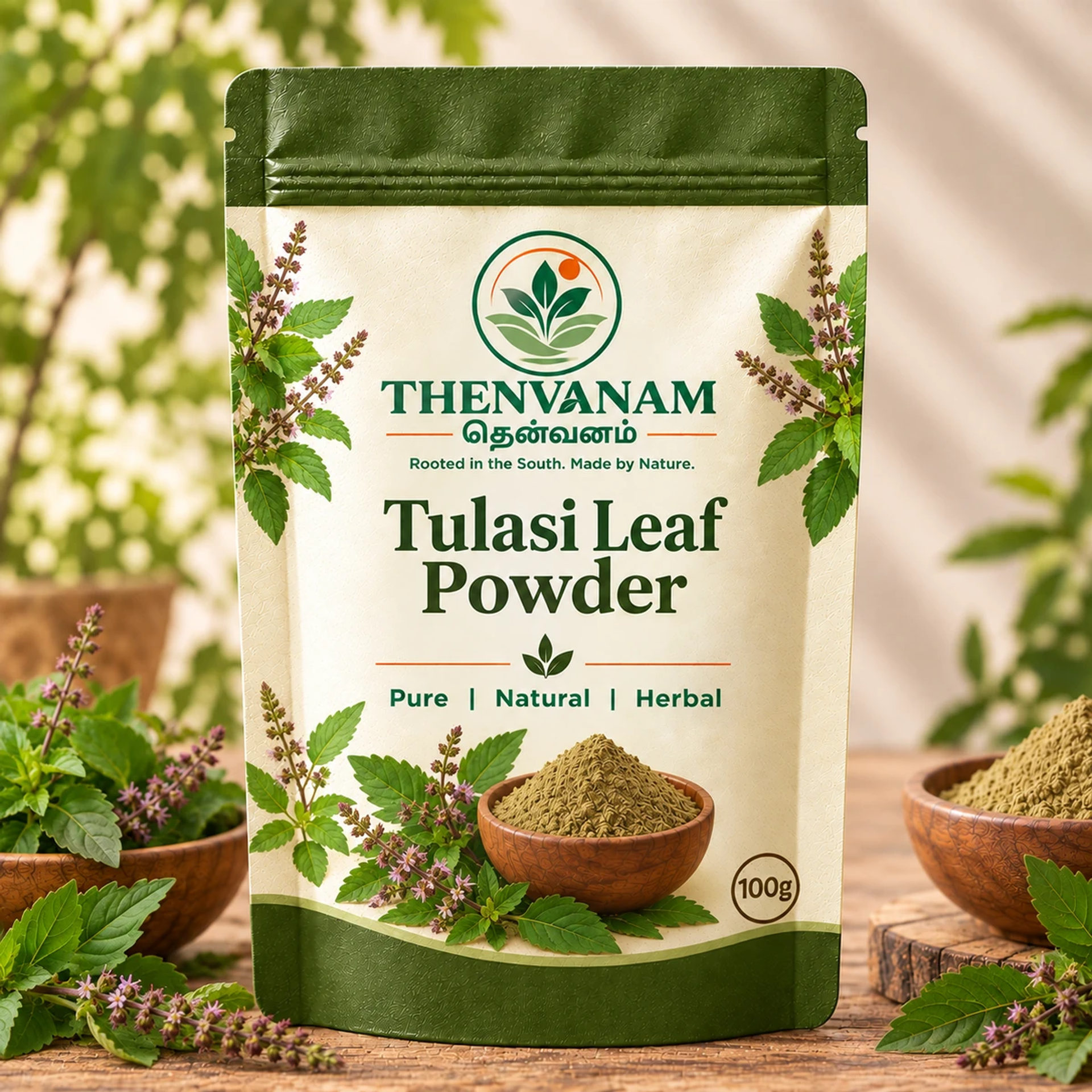
Tulasi Leaf Powder
Single ingredientNo fillers or blendsShips in 7 days
Pure tulasi leaf powder prepared from naturally dried holy basil leaves.
100 g

Skin Care
Neem Leaf Powder
Single ingredientNo fillers or blendsShips in 7 days
Pure dried neem leaf powder for traditional skin and personal-care preparations.
100 g

Skin Care
Rose Petal Powder
Single ingredientNo fillers or blendsShips in 7 days
Finely powdered dried rose petals for traditional natural beauty preparations.
100 g
Related reading
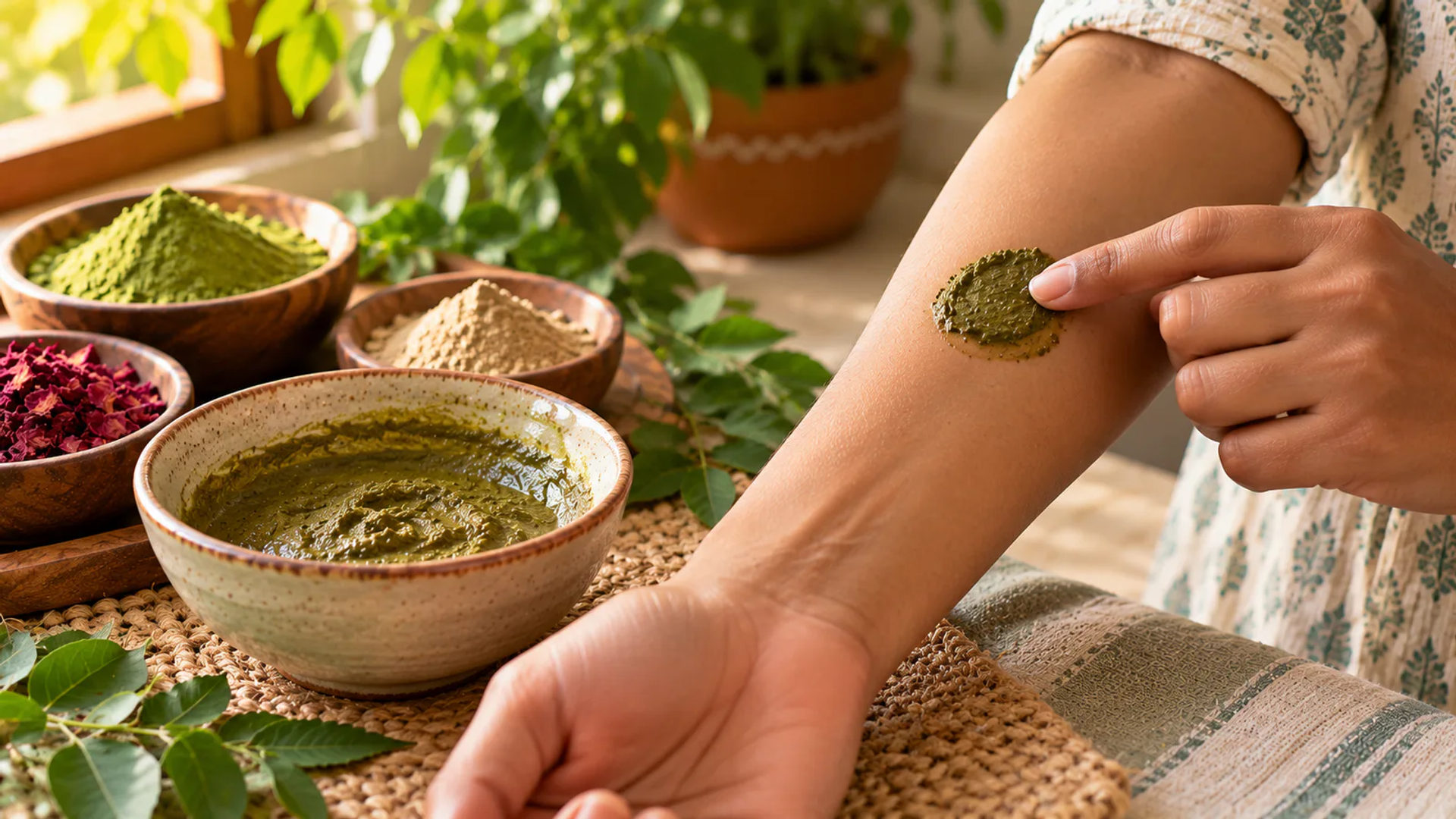
How to Patch Test a Botanical Powder
Four steps, done once per powder. The reason single-ingredient powders are worth buying is the same reason a patch test is straightforward.
4 min read

Choosing a Base for a Face Pack: Water, Aloe or Yogurt
Every traditional pack recipe ends the same way — "mix with a suitable natural base". Which base you choose changes the consistency, the drying time and how the pack comes off.
5 min read
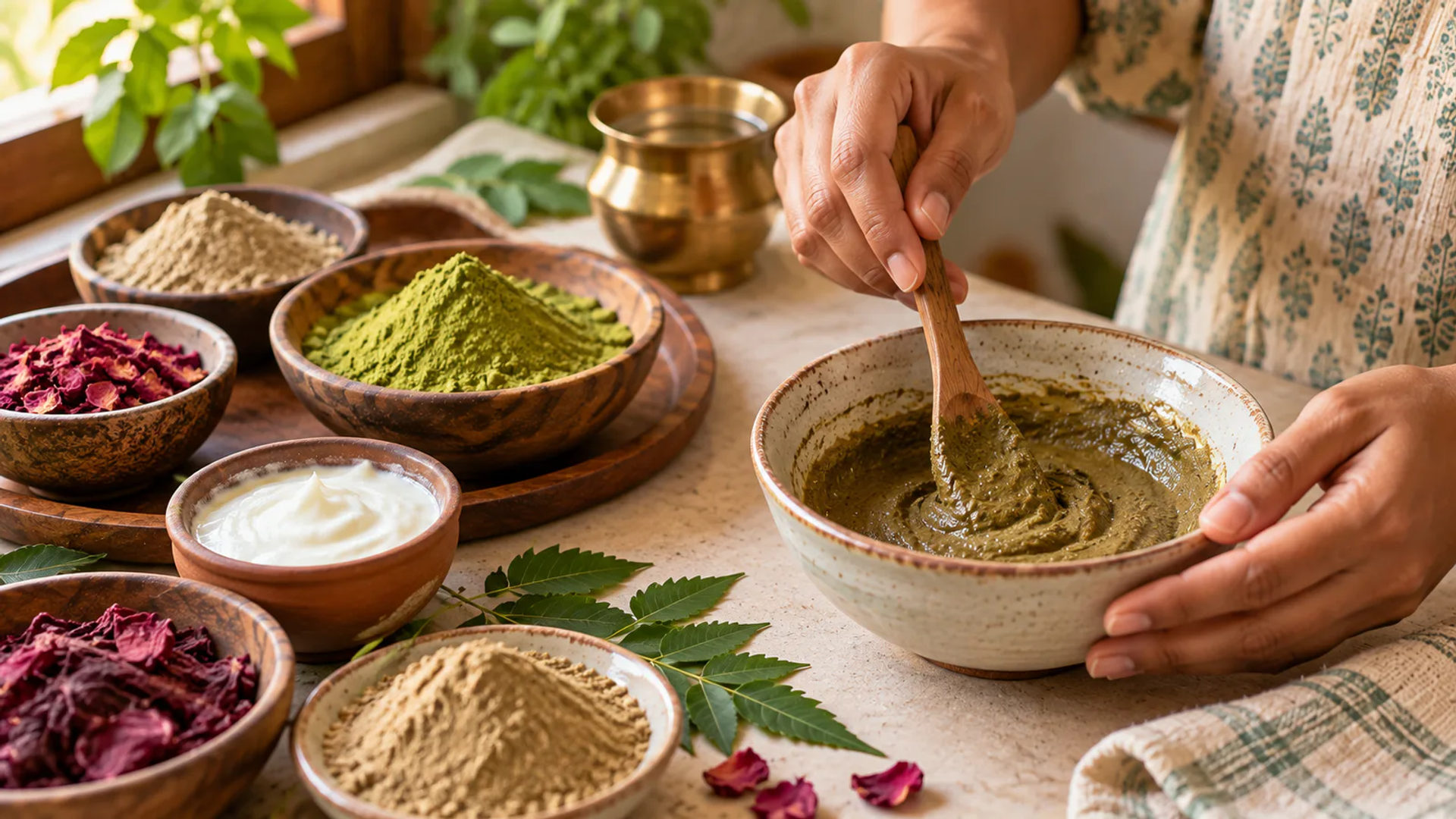
Making Your First Traditional Face Pack
Rose petal, a base and a patch test. The five steps that turn a jar of powder into a pack you can actually use.
5 min read