
Moringa oleifera powder compared with amla and neem powders: choosing the right powder for your routine
By THENVANAM Editorial ·
In short
Moringa is a leaf powder, amla is a fruit powder, and neem is a leaf powder. This guide compares their traditional uses in hair and skin routines and discusses moringa in everyday cooking.

Choosing a powder for your routine
Three green powders. Three distinct smells. Three very different jobs. If you have ever stood in front of moringa oleifera powder, amla, and neem wondering which one your hair or skin actually needs, you are not alone. The confusion is understandable: they all come from plants, they are all rooted in the same South Indian household tradition, and they are all sold in similar packets with similar claims. At THENVANAM, all three are available as single-ingredient powders with nothing added, which means the question of which one to order is worth answering before you place that WhatsApp message. This article does exactly that.
The plant part is the starting point
Moringa oleifera powder is made from dried, milled leaves of the Moringa oleifera tree, not the seed or the bark. That distinction matters more than most buyers realise, because the plant part determines the chemistry, the taste, the smell, and the result on your hair or skin. Amla powder is made from dried Indian gooseberry fruit. Neem powder is typically milled from dried neem leaves, though some suppliers use seed or bark without stating which. These are three different plant parts from three unrelated plants, which is why their colour, smell, taste, and effect on hair and skin differ so significantly. A product labelled simply "amla" without listing the botanical name, the plant part, and the variety can mean something quite different depending on who made it.
The phytochemistry reflects this clearly. Organic moringa oleifera powder is nutritionally dense: it contains protein, calcium, iron, carotenoids, and a range of flavonoids including quercetin and kaempferol. Amla fruit powder is known for its tannin-rich polyphenol profile and its vitamin C content, though how much vitamin C survives drying depends heavily on the method used. Neem leaf is in a different category altogether: its distinctive bitter compounds, particularly the limonoids like azadirachtin and nimbin, make it more of an active botanical than an everyday nutritional ingredient.
Their traditional place in South Indian homes
In Tamil and South Indian households, all three have been used for generations, but in sharply distinct ways. Moringa, known as murungai keerai in Tamil, was a kitchen botanical first: added to sambar, cooked into dal, or ground into a podi with roasted lentils and dried chillies. Grandmothers who grew the tree in the backyard would strip the leaves and toss them into whatever was on the stove that evening. Amla was the fruit eaten raw during season, pickled for the rest of the year, or pressed into oil for hair care. Neem was kept strictly for the scalp, for the skin, and occasionally for the garden, it never went into the cooking pot in any meaningful quantity. That traditional separation remains a useful practical guide to how each powder is best used today.
What each botanical brings to the scalp and strand
For hair care, these three powders do not really compete with each other: they address different problems. Neem is best suited to scalp concerns such as dandruff, persistent itchiness, and excess oiliness. Its bitter limonoid compounds have traditionally been used for their cleansing effect on the scalp, and it is rarely used as a general conditioner for good reason. Amla is the choice for building strand strength and adding shine, which is why it has anchored South Indian hair oil recipes for centuries. It brings a tartness that actually works well on the hair shaft.
Moringa leaf powder has a different quality entirely. It is more nourishing than corrective, contributing to the overall condition of the hair when used consistently in a weekly pack rather than targeting one specific problem. If your hair is dry or dull but not particularly troubled by scalp issues, moringa is the gentler starting point.
Practical hair pack ratios to try
Three simple formulations are worth keeping on hand:
Start with one powder at a time. Using all three in the same week makes it impossible to know which one your hair is responding to. Give each botanical at least two to three sessions before you draw any conclusions.
- Neem scalp mask:one teaspoon of neem powder mixed with two tablespoons of plain curd, applied only to the scalp for twenty minutes before a full wash. This is a traditional home preparation; if you have a sensitive scalp, limit contact time and rinse thoroughly.
- Amla shine pack:two teaspoons of amla powder mixed with warm water to form a paste, applied from root to tip and left on for fifteen to twenty minutes. A common home recipe with a long culinary and cosmetic tradition in South India.
- Moringa conditioning pack:one teaspoon of moringa leaf powder blended with coconut milk and a small amount of castor oil into a spreadable paste, applied across the length of the hair.
Matching each botanical to skin type and concern
Neem is the strongest of the three on skin and should be used sparingly on oily or congested skin, always diluted well with a base such as plain water, rose water, or aloe vera gel. A five to ten minute application is sufficient; leaving it on until it completely dries and tightens is unnecessary and can cause irritation. Amla powder, with its natural fruit acids and tannin-rich chemistry, suits skin that needs brightening and is generally gentler than neem. Moringa oleifera powder is the mildest of the three for topical use and works across most skin types mixed with rose water or raw milk for a once-weekly face pack.
If you have sensitive skin, moringa is generally the safest starting point, given its comparatively mild, food-like profile. Work with it for several weeks before considering the more active botanicals. There is no urgency to introduce all three at once, and the skin will tell you clearly enough when something does not suit it. Those with known skin sensitivities should patch-test diligently and consult a dermatologist if uncertain.
Always patch-test before a full face application
This step cannot be skipped, especially with neem. Apply a small amount of your prepared paste to the inner forearm, leave it for fifteen to twenty minutes, and wash it off. Then wait twenty-four hours before applying anything to your face. If you notice redness, swelling, or itchiness at the test site, do not proceed with that particular botanical on your face. This applies to every powder, even ones you have used before, because sourcing and processing can vary between batches and between suppliers.
Adding moringa oleifera powder to daily cooking and drinks
Amla shows up occasionally in drinks and pickles. Neem stays almost entirely off the plate. Moringa oleifera powder is the one botanical from this trio that genuinely belongs in everyday food, and this is where its traditional use in Tamil households was always centred. Half a teaspoon stirred into a morning smoothie with banana, coconut milk, and a pinch of black pepper is one of the most common approaches. It also works folded into a fresh coconut chutney, blended in at the end so the heat is off. The flavour is mild, slightly grassy, and disappears easily into a strong-flavoured base.
For a more traditional preparation, murungai keerai podi is made by dry-roasting the leaves with lentils, dried chillies, and sesame before grinding into a coarse powder. Mixed into hot rice with sesame oil or ghee, it is one of the simplest and most satisfying ways to use the botanical exactly as it has been used for generations in South Indian homes.
Keeping the amount sensible
For dietary use, one to two grams daily (roughly half to one teaspoon) is a sensible starting point. Human research on moringa leaf powder uses is still early-stage, with most studies using small amounts over short periods. Use it as a food ingredient with a long culinary tradition behind it, not as a treatment for a health condition. If you are pregnant, managing a chronic illness, or taking regular medication, speak to a clinician before adding moringa powder to your daily diet. The blood-glucose and blood-pressure effects suggested in some small trials mean it can interact with certain medications in ways that are worth discussing with a healthcare professional.
What single-ingredient actually means on a label
A powder containing only moringa leaf, only amla fruit, or only neem leaf should say exactly that on the label, along with the plant's botanical name, the part of the plant used, and ideally the region of origin. It should contain no fillers, flow agents, fragrance, colour additives, or carrier ingredients. If the ingredient list has more than one entry, uses terms like "proprietary blend," or simply omits which part of the plant was used, it is not a pure single-ingredient product.
This matters because mixing powders without labelling them accurately makes it impossible for you to know what you are applying to your hair or eating in your morning smoothie. Sensory checks help: genuine moringa oleifera powder has a grassy, mildly earthy smell, a dull to medium green colour that reflects drying conditions, and a slightly bitter taste. Unnaturally vivid green can indicate added colour. Musty, damp, or rancid odours are signs of moisture damage or age. Hard clumps, webbing, or any visible growth mean the powder should be discarded immediately.
THENVANAM's approach to sourcing and labelling
At THENVANAM, the stated practice is to list the botanical name, the plant part used, and the composition on each product, with no health claims attached. Moringa leaf powder is sold as moringa leaf powder: not as a "superfood complex," not as a "hair growth formula," simply as the dried leaf of Moringa oleifera. The same principle applies to amla and neem. Orders come through WhatsApp, where you can ask which botanical suits your concern, what quantities make sense, and how to use it.
For someone building a routine around individual botanicals rather than pre-blended products, this kind of transparent sourcing reduces the guesswork considerably. You know what you are buying. You know what you are applying. That is the point.
Shelf life and the conditions that shorten it
Packaged moringa leaf powder typically carries a twelve to twenty-four month shelf life. Treat twelve to eighteen months as your practical quality window. Heat, humidity, light, and oxygen are the four things that degrade these powders fastest, stripping colour, vitamin content, and active phytochemicals in the process. Neem and amla powders follow the same rules. The most common mistake in Indian climates is leaving an opened packet near the stove or on a shelf where cooking steam and ambient light reach it every day.
Simple storage rules that actually work
Transfer your opened powder into an airtight, opaque container: glass or metal works better than thin plastic for long-term storage. Store it below 25°C, away from the cooking area. In coastal cities or during the monsoon, add a small food-safe desiccant packet to the container. Refrigeration works well if you can ensure no condensation enters the powder when you open the container. Let the sealed container come to room temperature before opening it each time. Always use a clean, dry spoon. Discard the powder if it smells musty, has developed hard damp clumps, or has shifted noticeably from its original green to a dull brown or yellow.
The simplest way to decide
Moringa leaf powder nourishes. Amla strengthens. Neem corrects. Used in the right context, each one is quietly effective over time. Used interchangeably or without knowing what you have actually bought, they are just green powder in a packet.
The most important decision is not which brand to choose. It is whether what you are buying is genuinely a single ingredient, honestly labelled, from a source that can tell you what it is, where it came from, and which part of the plant went into the bag. That clarity makes every hair pack, face pack, and morning smoothie more worthwhile, and means you can stop second-guessing and start actually using the botanical that fits your routine.
If you are not sure which powder, moringa oleifera powder, amla, or neem, suits your hair, skin, or daily diet, contact THENVANAM on WhatsApp. The team responds with straightforward guidance on which botanical suits your concern and how to use it sensibly.
Frequently asked questions
How much moringa oleifera powder should I take daily?
For dietary use, one to two grams per day (roughly half to one teaspoon) is the commonly cited starting point, consistent with amounts used in early-stage human studies. It is best used as a food ingredient rather than a supplement taken in large quantities. If you have a health condition or take regular medication, speak to a clinician before adding it to your daily routine.
Is moringa powder safe during pregnancy?
Human safety data for moringa leaf powder during pregnancy is limited. Traditional use has generally restricted it in pregnancy out of caution, and this remains the practical guidance. Consult a gynaecologist or qualified healthcare provider before using it if you are pregnant or trying to conceive.
What is the difference between moringa leaf powder and moringa capsules?
Moringa capsules typically contain the same moringa leaf powder in a pre-measured dose, which can be convenient for those who dislike the taste. The powder form gives you more flexibility, you can use it in cooking, hair packs, and face packs, and allows you to verify quality through sensory checks (colour, smell, taste) that capsules do not allow. For moringa powder uses that go beyond simple supplementation, the loose powder is more versatile.
What does moringa oleifera powder smell and taste like?
Genuine moringa leaf powder has a mildly grassy, slightly earthy smell and a faintly bitter taste. The colour ranges from dull to medium green depending on drying conditions and freshness. An unnaturally vivid green or a musty, rancid smell are signs of adulteration or moisture damage.
Where can I find moringa powder in India?
Moringa powder India availability has improved significantly, with both local herb shops and online botanical suppliers stocking it. When buying, look for a product that clearly states the botanical name (Moringa oleifera), the plant part (leaf), and contains no additives. THENVANAM supplies single-ingredient moringa leaf powder with clear labelling, available to order via WhatsApp.
What this page is based on
NCBI Bookshelf reference supplied with the article — NCBI
Reference included in the supplied article. It does not establish product-specific benefits or a safe daily dose.
Storage conditions and packaging of Moringa oleifera powder — NCBI
Reference included in the supplied article. It does not establish product-specific benefits or a safe daily dose.
PMC reference supplied with the article — NCBI
Reference included in the supplied article. It does not establish product-specific benefits or a safe daily dose.
About the author
THENVANAM Editorial · Product and content team
The THENVANAM editorial team documents what each botanical is, which part of the plant is used, and how it has traditionally been prepared in South Indian households. We describe traditional practice and product composition — we do not offer medical advice.
Shop the products

Wellness
Moringa Leaf Powder
Single ingredientNo fillers or blendsShips in 7 days
Pure moringa leaf powder made from carefully dried moringa leaves, finely ground for everyday use.
100 g

Wellness
Amla Powder
Single ingredientNo fillers or blendsShips in 7 days
Finely ground amla fruit powder made from naturally dried Indian gooseberries.
100 g

Skin Care
Neem Leaf Powder
Single ingredientNo fillers or blendsShips in 7 days
Pure dried neem leaf powder for traditional skin and personal-care preparations.
100 g
Related reading

Moringa Powder Benefits: What It Is, What Is in It and How It Is Used
Moringa powder is dried, ground leaf of the drumstick tree. Here is what is actually in it, what the powder form genuinely does well, what the research does and does not say, and how it is used at home.
7 min read

Moringa Powder Side Effects: Who Should Be Careful and Why
Moringa leaf has been eaten in Indian homes for generations, but that does not mean it suits everyone in every amount. Here are the side effects people report, who should check with a doctor first, and how to start safely.
5 min read
Amla Powder for Hair: Benefits, Hair Growth and How to Use It
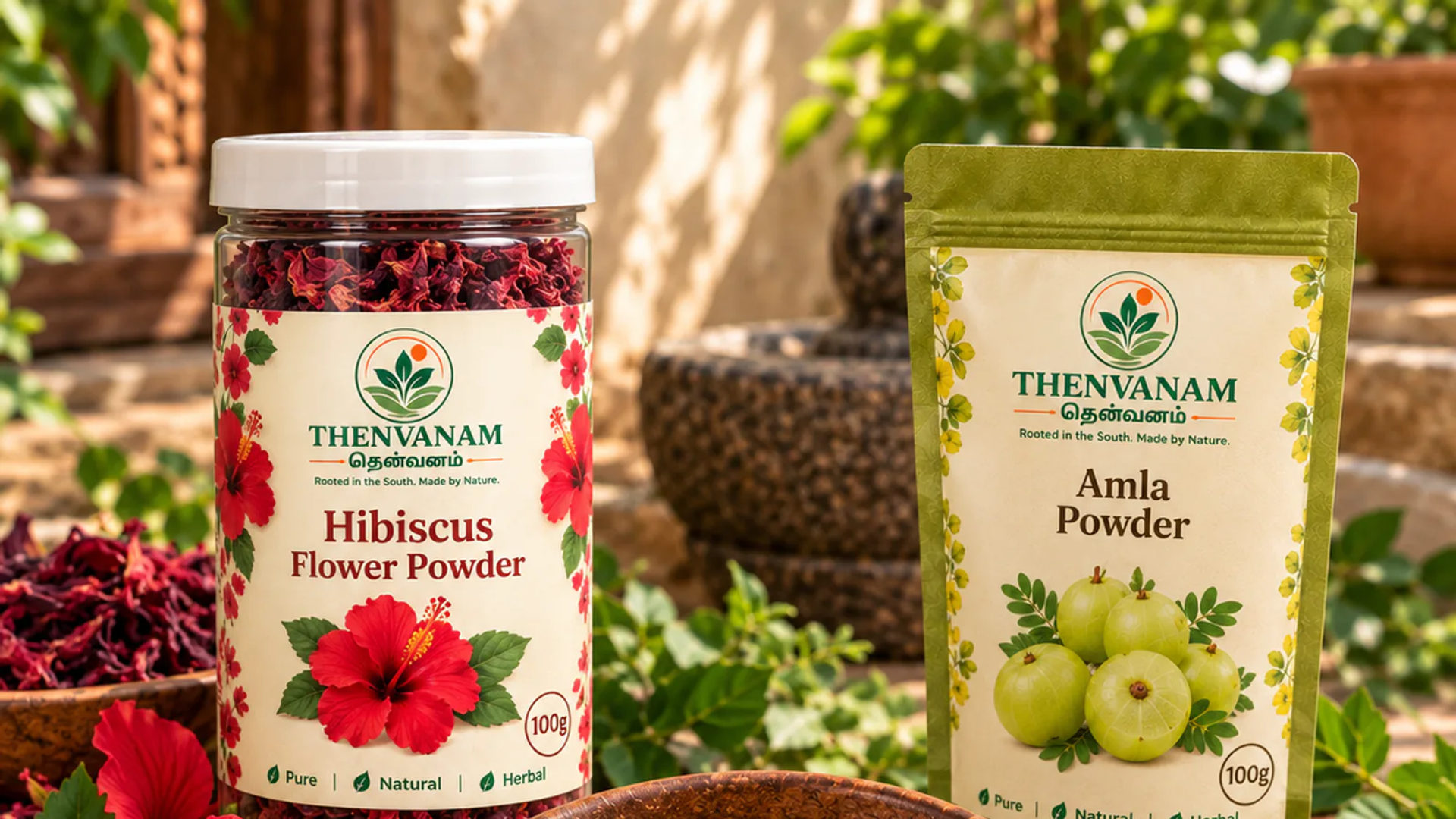
Amla, the Indian gooseberry, is one of the oldest ingredients on the South Indian hair-care shelf. Here is why it is used, what it can and cannot do for hair growth, and how to use the powder well.
5 min read

How to Use Moringa Powder for Hair, Skin and Cooking
Practical moringa preparations for hair packs, face masks and smoothies, with simple ideas for adding the powder to everyday dishes.
4 min read