
How to Identify a Pure Herbal Powder
By Thenvanam Editorial ·
In short
A pure herbal powder lists one ingredient, has the natural colour and smell of that plant, and contains nothing that does not belong — no perfume, no sweetness, no unnatural brightness. Know what each powder should look and smell like, and check the label for anything extra.
Products in this article
 Shikakai Powder
₹149 · 100 g
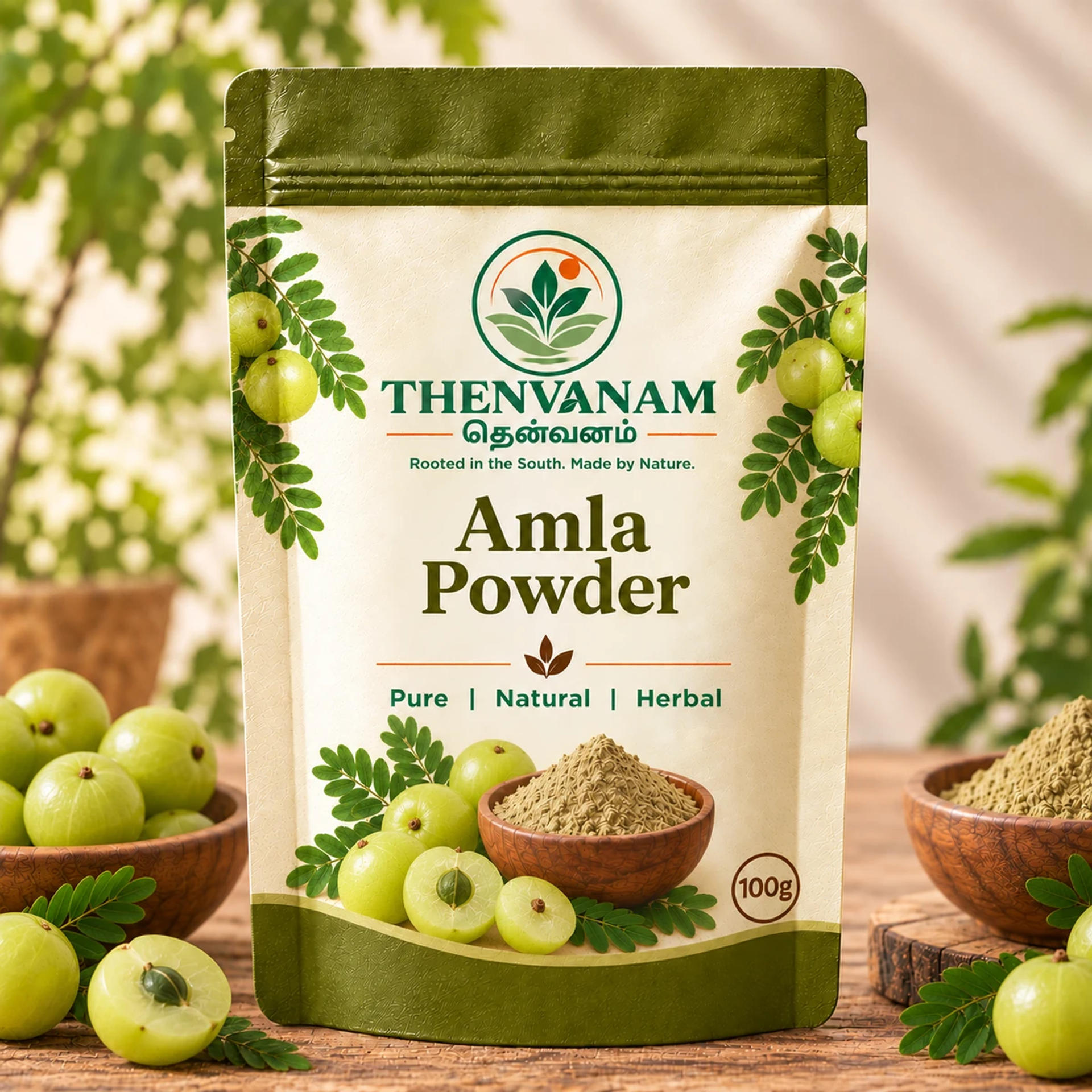 Amla Powder
₹149 · 100 g
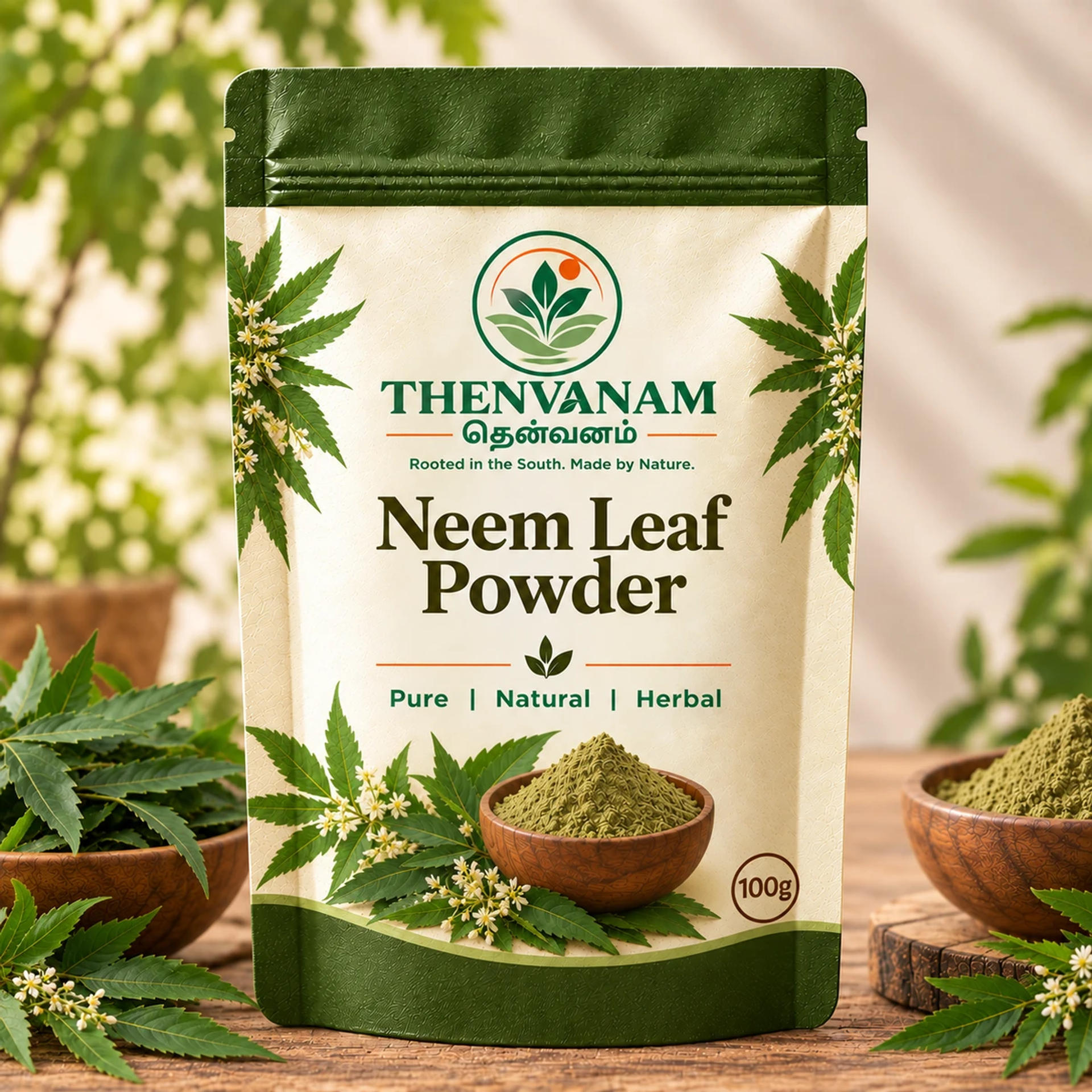 Neem Leaf Powder
₹119 · 100 g
- Single ingredient, nothing added
- Delivered across India in 7 days
- Free delivery over ₹999
Read the label first
A single-ingredient powder should name one ingredient — for example "Shikakai (Acacia concinna) pods" — and nothing else. Words such as "herbal blend", "with natural fragrance" or a long ingredient list mean it is not a single-ingredient powder, whatever the front of the pack says.
Check the botanical name and plant part
A careful label names the plant by its botanical name and says which part was ground. The part matters: moringa leaf and moringa seed are different products, as are neem leaf and neem bark. For example:
- Moringa: Moringa oleifera — leaf.
- Shikakai: Acacia concinna — pod.
- Amla: Phyllanthus emblica — fruit.
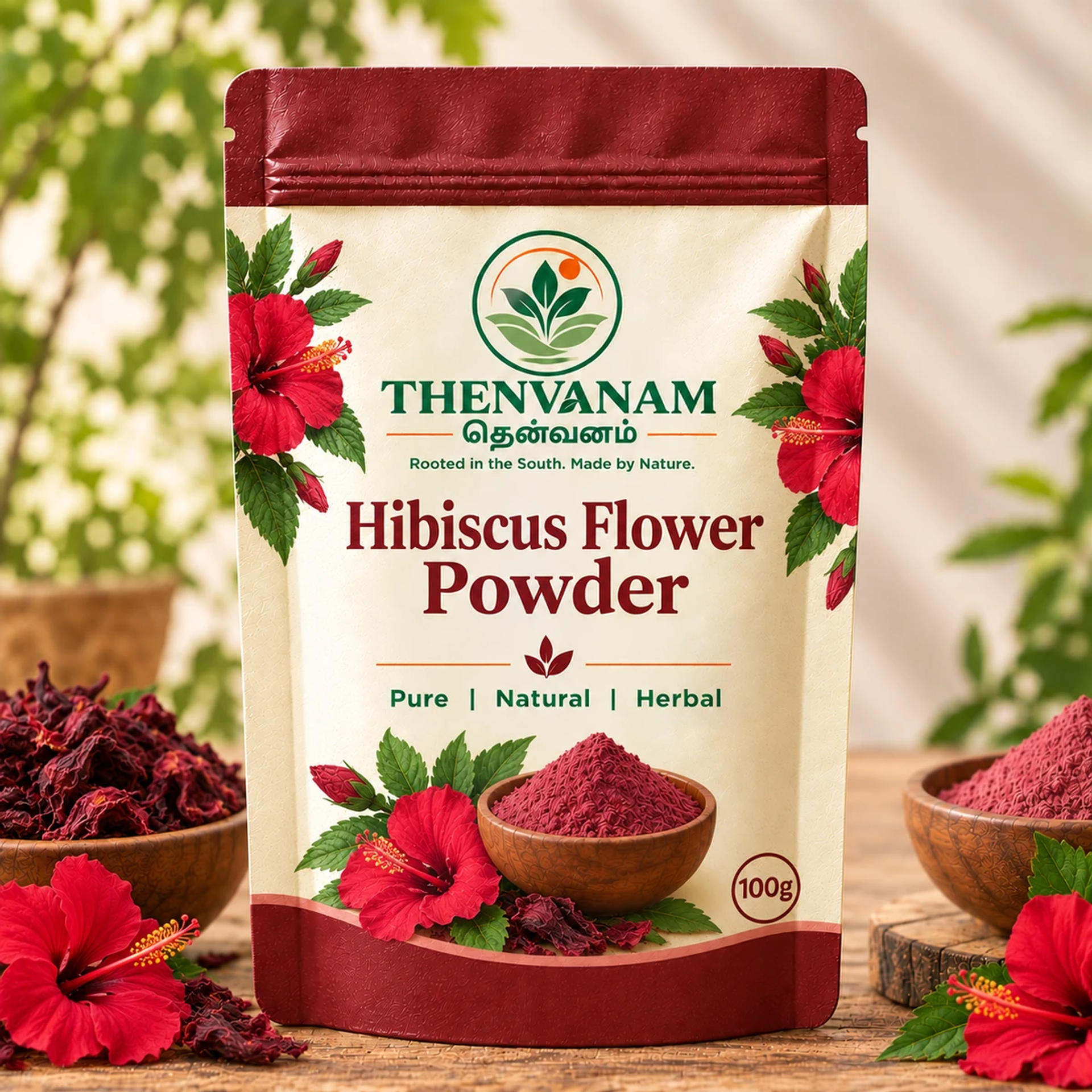
- Hibiscus: Hibiscus rosa-sinensis — flower.
- Neem: Azadirachta indica — leaf.
- Avarampoo: Senna auriculata — flower.
Know the natural colour
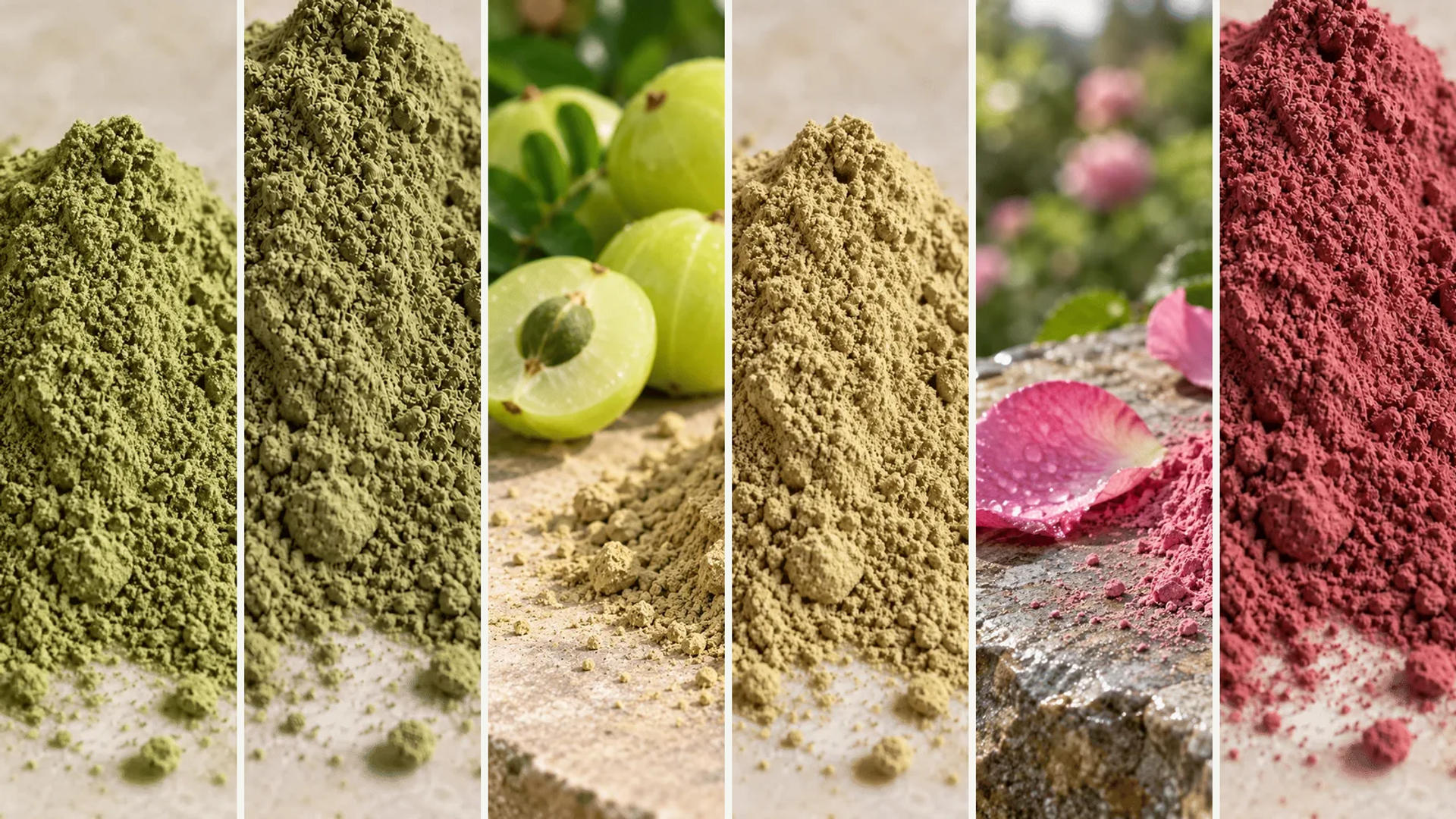
Each plant has its own colour once dried and ground:
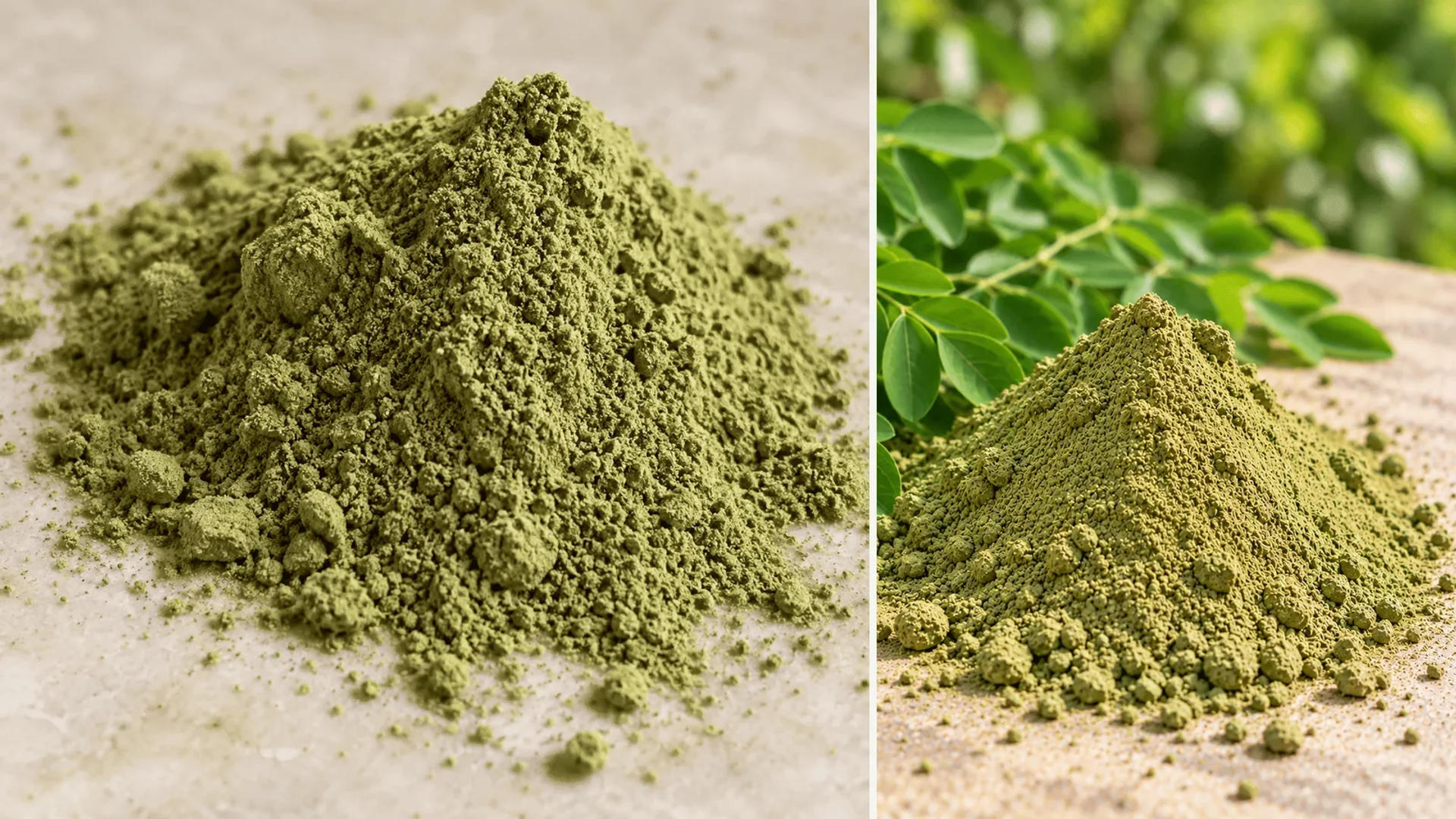
- Moringa and neem: green — moringa brighter, neem more olive.
- Amla: light brown to beige.
- Shikakai: light to mid brown.
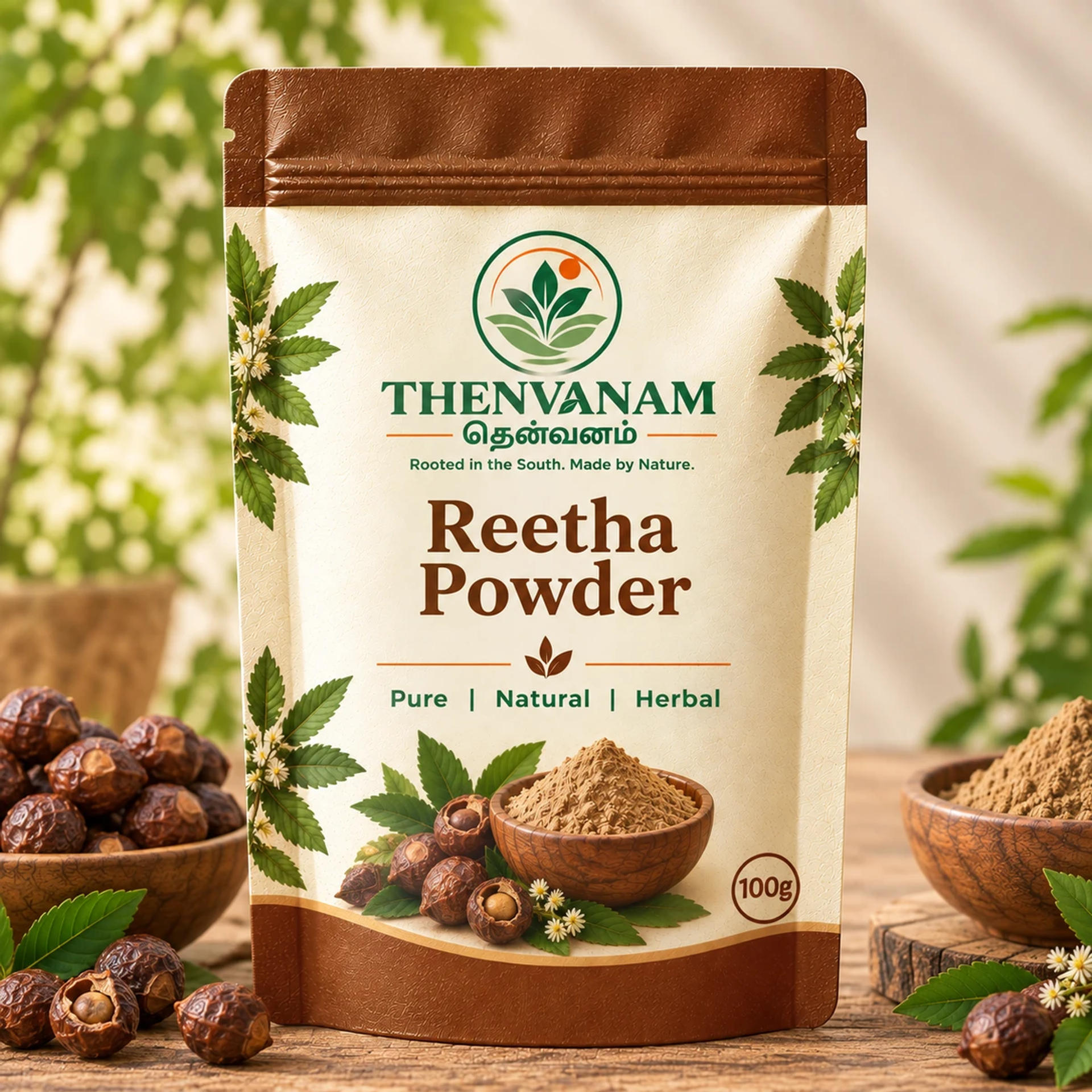
- Reetha: pale brown.
- Hibiscus: deep red to maroon.
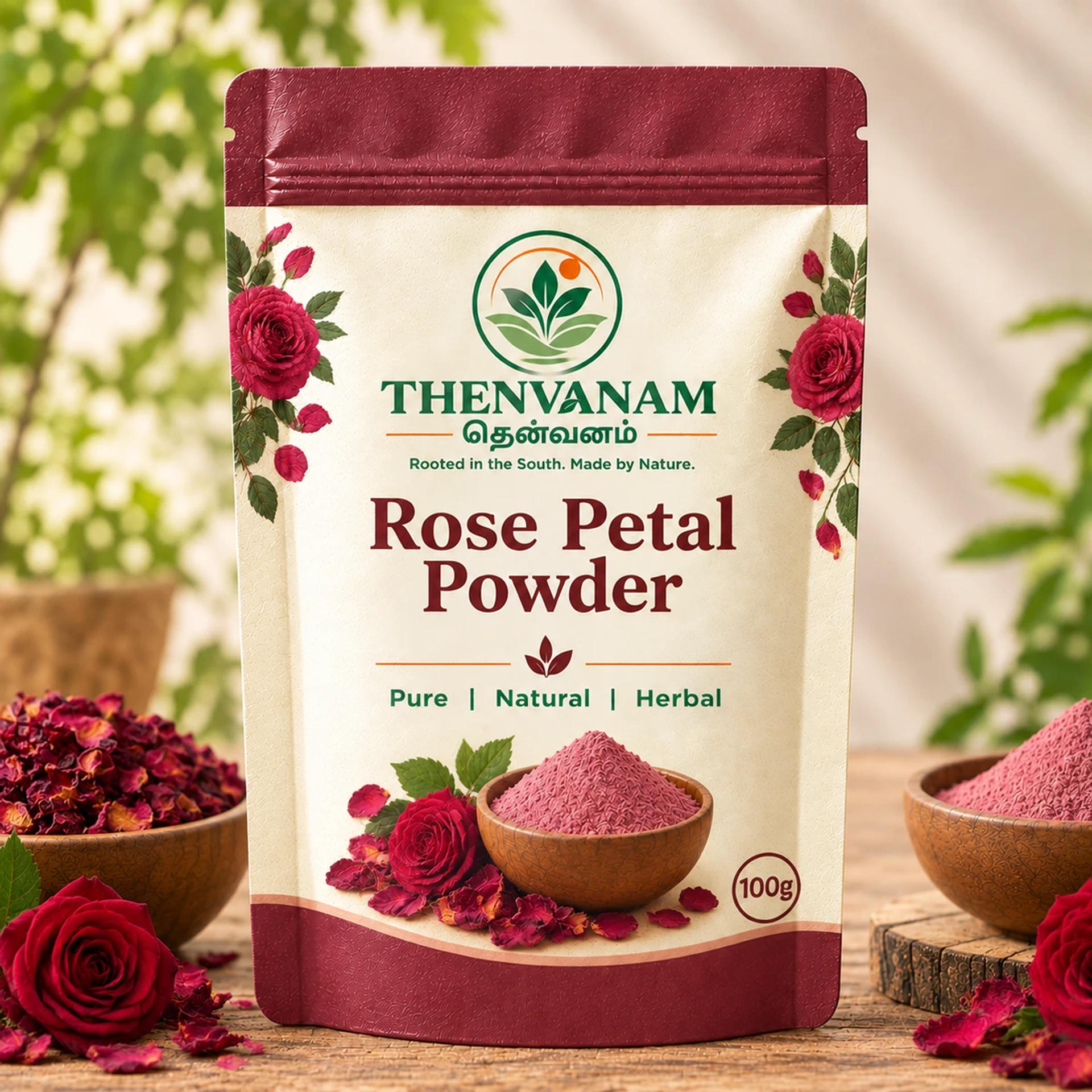
- Rose petal: dusky pink to brown.
What colour can and cannot tell you
Colour shows freshness better than purity. A powder that has faded to a dull brown has usually been stored too long or in the light. But colour alone cannot prove a powder is pure — a dye or a filler can match it, and the natural colour of a plant varies with season, drying and how fine it is ground. Use colour together with the smell, texture and label.
Trust your nose
A pure powder smells of its plant: bitter for neem, leafy for moringa, sour-fruity for amla, earthy for shikakai. A perfumed smell means fragrance has been added. No smell at all usually means old stock.
Check the texture
Rub a pinch between your fingers. It should feel even and powdery. Grit or sand, hard lumps, or a slightly sticky feel are all reasons to doubt it.
Be wary of
These are the usual signs that a powder is not what it claims:
- An unusually bright or uniform colour for that plant.
- A sweet taste or smell in a powder that should be bitter or sour.
- Perfume or "fresh" scent.
- Very low prices for powders that need a lot of raw material.
Questions to ask the seller
A seller of single-ingredient powders should be able to answer:
- Which plant, and which part of it, is in the pack?
- Is anything added — fillers, fragrance, colour or anti-caking agents?
- When was it packed, and what is the best-before date?
- Is it sold for food, or for external use only?
Signs of moisture damage or spoilage
Throw a powder out if you see any of these:
- Hard lumps that do not crumble between your fingers.
- A musty, sour or damp smell instead of the plant’s own.
- White, grey or green fuzz, or fine webbing.
- Insects, or patches that have darkened.
Storing powders in humid weather
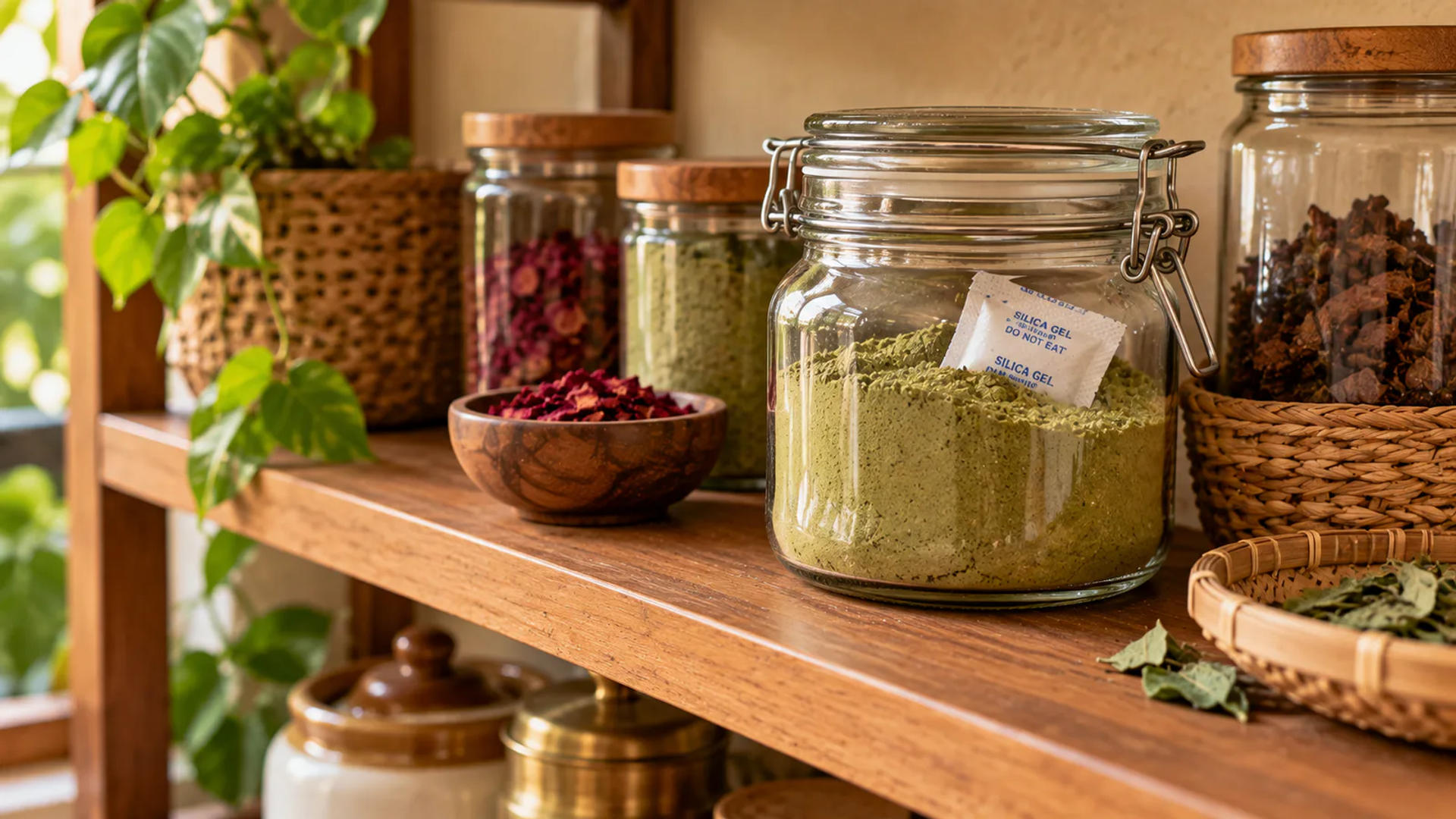
Once a pack is open, moisture is the biggest risk — especially in coastal and monsoon humidity. Our article on storing powders in humid weather covers it in detail; the essentials:
- An airtight glass or steel jar, filled close to the top.
- A small jar for daily use, refilled from the main one, so the main stock is opened less.
- A dry spoon every time.
- Away from the bathroom, the stove and direct sunlight.
Key takeaways
- One ingredient on the label, ideally with the botanical name.
- Natural colour and the plant’s own smell — never perfume.
- Even texture with no grit, damp clumps or stickiness.
Frequently asked questions
How can I tell if herbal powder is adulterated at home?
Check the label for a single ingredient, compare the colour and smell with what that plant should have, and feel for grit or stickiness. Perfume, sweetness or an unusually bright colour are warning signs.
Should herbal powder have a smell?
Yes — the smell of the plant itself. A perfumed smell means something was added; no smell usually means it is old.
Does a darker colour mean better quality?
Not necessarily. Each powder has its own natural colour; what matters is that it matches the plant and has not faded to dull brown.
Does the colour of a herbal powder prove it is pure?
No. Colour shows whether a powder is fresh or faded, but a dye or filler can match it. Check the label, smell and texture as well.
How do I know if my herbal powder has gone bad?
Hard lumps that do not crumble, a musty or sour smell, fuzz or webbing, or insects. Throw it out if you see any of these.
What this page is based on
Botanical nomenclature and regional plant names — Thenvanam Editorial
Botanical names are given in the accepted binomial form; Tamil and other regional names are recorded as they are used in South Indian households.
Thenvanam product specification — Thenvanam Sourcing
Composition, net quantity, SKU and usage guidance are taken from the current product specification for each pack.
About the author
Thenvanam Editorial · Product and content team
The Thenvanam editorial team documents what each botanical is, which part of the plant is used, and how it has traditionally been prepared in South Indian households. We describe traditional practice and product composition — we do not offer medical advice.
Shop the products
Related reading
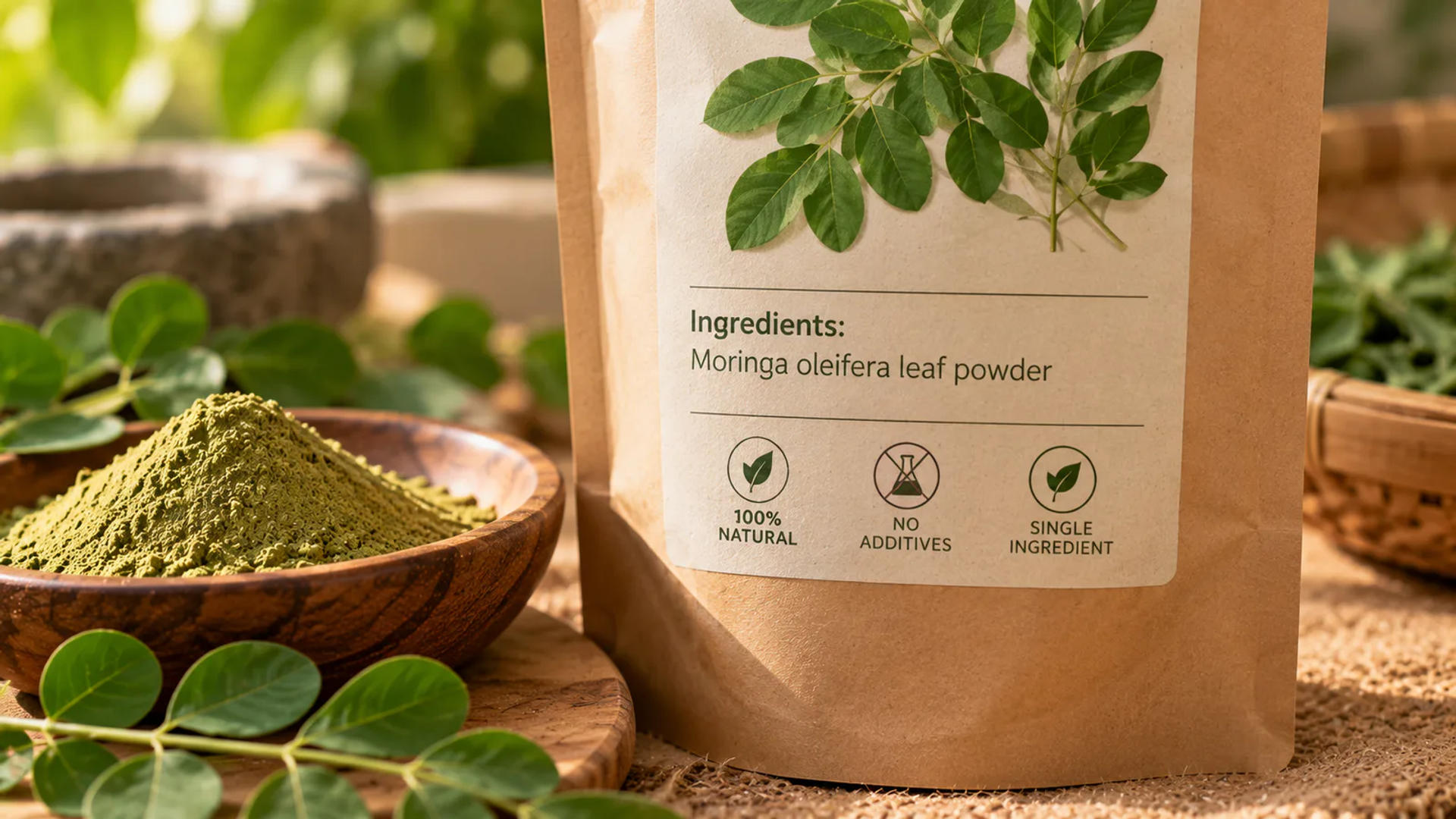
What "Single Ingredient" Actually Means on a Powder Pack
The phrase appears on almost every natural-products label. Here is the specific thing it means on a Thenvanam pack, and what it does not mean.
4 min read
How to Store Herbal Powders in Humid Weather
Coastal South India is not a kind place to store a dry powder. A few small habits make the difference between a pack that lasts and one that clumps in a month.
4 min read
How a Leaf Becomes a Powder: Drying and Milling
Between the plant and the pack there are two steps that decide almost everything about the finished powder. Neither is complicated. Both are easy to get wrong.
5 min read
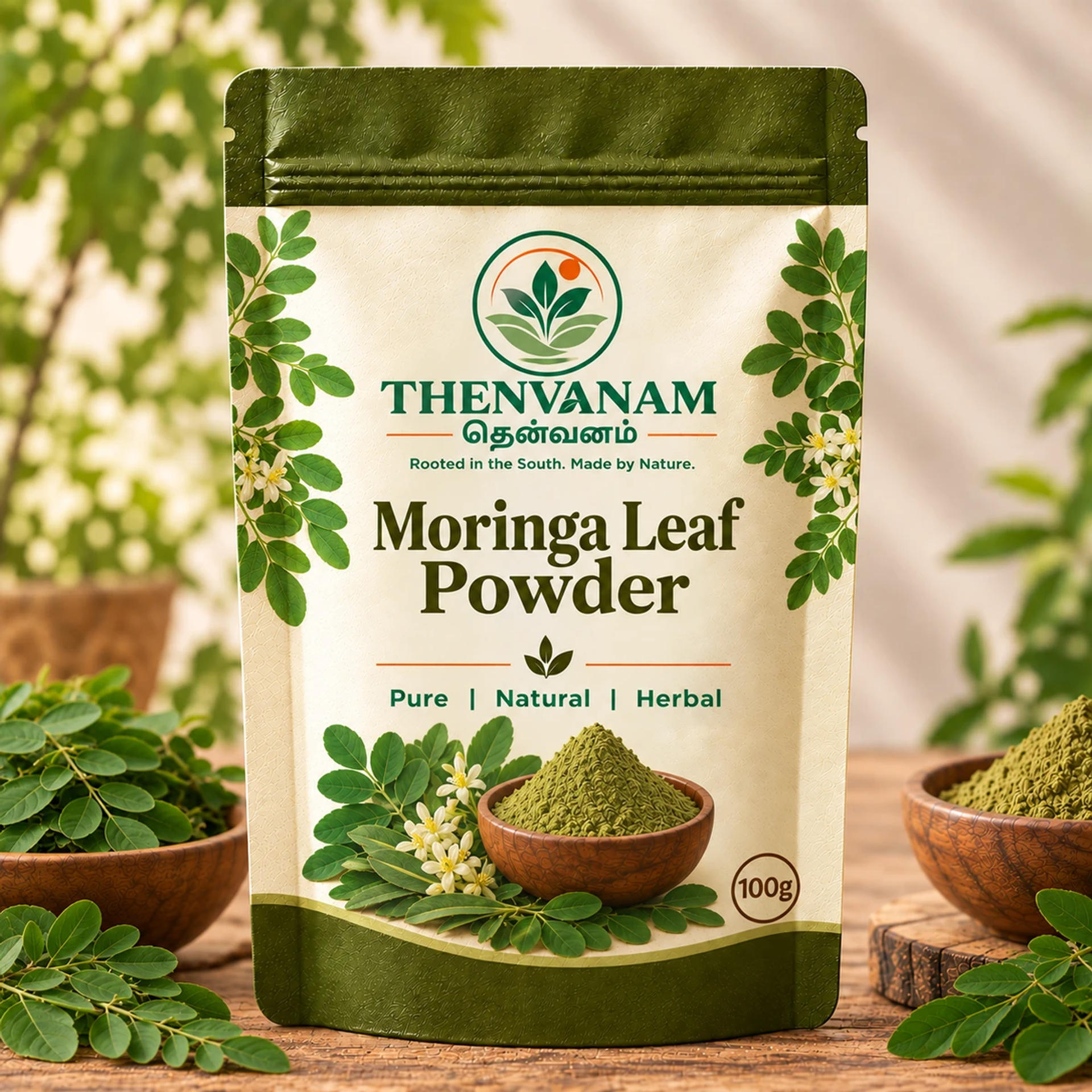
How to Choose a Good Quality Moringa Leaf Powder
Colour, smell, texture and the label: what separates good moringa leaf powder from a dull, stale or blended one.
3 min read