
How to Use Amla Powder: A Step-by-Step Hair Pack Guide
By THENVANAM Editorial ·
In short
To use amla powder as a hair pack: patch test first, mix about 2 tablespoons of powder with water or a suitable hair-care base into a smooth paste, apply it to hair and scalp section by section, leave it for around 15–30 minutes, then rinse thoroughly before it dries hard. Mix fresh for each use. For food, use it only according to the dish you are making.

Steps
Patch test first
Mix a pinch of amla powder with the base you plan to use and apply it to a small area of skin, such as the inner forearm. Wait before using it more widely, and do not go ahead if there is any irritation.
Measure into a dry bowl
Take about 2 tablespoons of powder for shoulder-length hair — more for longer or thicker hair, less for short hair. Use a dry spoon and a glass or ceramic bowl, which is easier to clean than plastic.
Add the base gradually
Add water or your chosen hair-care base a little at a time, stirring out every dry pocket. Aim for a paste like thick yogurt — it should hold on the back of a spoon without running off.
Let it stand, then adjust
Leave the paste for a few minutes. Amla powder takes up liquid as it stands, so a paste that looked right at first often stiffens. Loosen it with a few drops more liquid if it has become hard to spread.
Apply section by section
Divide the hair into sections and work the pack onto the scalp first, then down the lengths. Keep the paste well away from the eyes, and wipe the hairline if it creeps down towards the forehead.
Leave it for a set time
Leave the pack on for around 15–30 minutes. Rinse before it dries completely — a pack that has dried hard flakes and is much harder to rinse out.
Rinse until the water runs clear
Rinse with plenty of lukewarm water, working through the scalp with your fingertips. Keep going until the water runs completely clear. Discontinue use if any irritation occurs.
Choosing the base and the consistency
The product guidance names water or a suitable hair-care base. Water is the simplest choice and the best one for a first attempt, because it shows you how the powder itself behaves. Aloe vera gel is the other base most often used in traditional hair packs, and it makes a smoother, slightly more slippery paste that is easier to spread through long hair.
Consistency matters more than the base. Too thin and the pack drips down the neck; too thick and it drags on the hair and leaves dry clumps behind. Start thicker than you want — adding liquid is easy, adding powder to a wet paste tends to make lumps.
- Water: plain and predictable; the best base for a first try.
- Aloe vera gel: smoother and easier to spread through long hair.
- Combining with other powders: amla is most often paired with hibiscus in equal parts — see the hibiscus and amla hair pack recipe.
Common mistakes and how to fix them
Most first attempts go wrong in one of a few predictable ways, and each has a simple fix.
- Gritty feel after rinsing: under-rinsing. Rinse for longer than seems necessary, and sieve the powder first if it has formed small lumps.
- Pack dripping down the neck: too much liquid. Stir in a little more powder, a pinch at a time.
- Hard, flaky patches: the pack was left until it dried. Rinse sooner next time; for now, wet the hair again and rinse slowly.
- Brown marks on towels and grout: amla is strongly coloured. Use an old dark towel around the shoulders and wipe splashes straight away.
- Mixing a big batch to save time: the pack does not keep. Mix only what you need for one application.
Using amla powder in food
Amla is one of three THENVANAM botanicals described for food use, alongside moringa and sangu poo. The guidance is short on purpose: use it only according to your intended culinary preparation. Follow the recipe you are making rather than improvising a quantity — the taste is sharp, sour and astringent, and a small amount goes further than most people expect.
Keep a separate dry spoon for the kitchen and hold the pack away from steam; the ingredient page covers storage in full. If you are pregnant, breastfeeding, taking medication or managing a health condition, ask a qualified professional before adding a new ingredient to your diet.
Key takeaways
- Patch test before the first hair pack, in the base you will actually use.
- Start with about 2 tablespoons for shoulder-length hair and adjust.
- Let the paste stand for a few minutes — it stiffens as the powder takes up liquid.
- Rinse before the pack dries hard, and keep rinsing until the water runs clear.
Frequently asked questions
How much amla powder do I need for a hair pack?
About 2 tablespoons is a reasonable starting point for shoulder-length hair. Longer or thicker hair needs more. Mix only what you will use in one application.
What should I mix amla powder with?
Water or a suitable hair-care base, as named in the product guidance. Water is the simplest place to start; aloe vera gel is the other base commonly used for hair packs.
How long should I leave an amla hair pack on?
Around 15–30 minutes is a practical range. Rinse before it dries completely, because a dried pack flakes and is harder to rinse out.
Should I apply it before or after washing my hair?
Either is used in traditional routines. Many people apply the pack before a wash and rinse it out first; others apply it to damp, freshly washed hair. Rinse thoroughly either way.
Can I mix amla with hibiscus or bhringraj?
Yes. Equal parts amla and hibiscus is the usual combination, with bhringraj added in a smaller proportion. Patch test each new powder separately first.
Can I eat amla powder?
Amla powder is described for food use. Use it only according to your intended culinary preparation, and follow the recipe you are making.
What this page is based on
THENVANAM product specification — THENVANAM Sourcing
Composition, net quantity, SKU and usage guidance are taken from the current product specification for each pack.
Documented South Indian household practice — THENVANAM Editorial
Descriptions of traditional use record how an ingredient has customarily been prepared and used. They are not statements of clinical effect and should not be read as health advice.
About the author
THENVANAM Editorial · Product and content team
The THENVANAM editorial team documents what each botanical is, which part of the plant is used, and how it has traditionally been prepared in South Indian households. We describe traditional practice and product composition — we do not offer medical advice.
Shop the powders

Wellness
Amla Powder
Single ingredientNo fillers or blendsShips in 7 days
Finely ground amla fruit powder made from naturally dried Indian gooseberries.
100 g

Hair Care
Hibiscus Flower Powder
Single ingredientNo fillers or blendsShips in 7 days
Finely powdered hibiscus flowers traditionally used in natural hair and beauty routines.
100 g

Hair Care
Bhringraj Powder
Single ingredientNo fillers or blendsShips in 7 days
Pure bhringraj leaf powder for traditional hair and scalp-care preparations.
100 g
Related reading
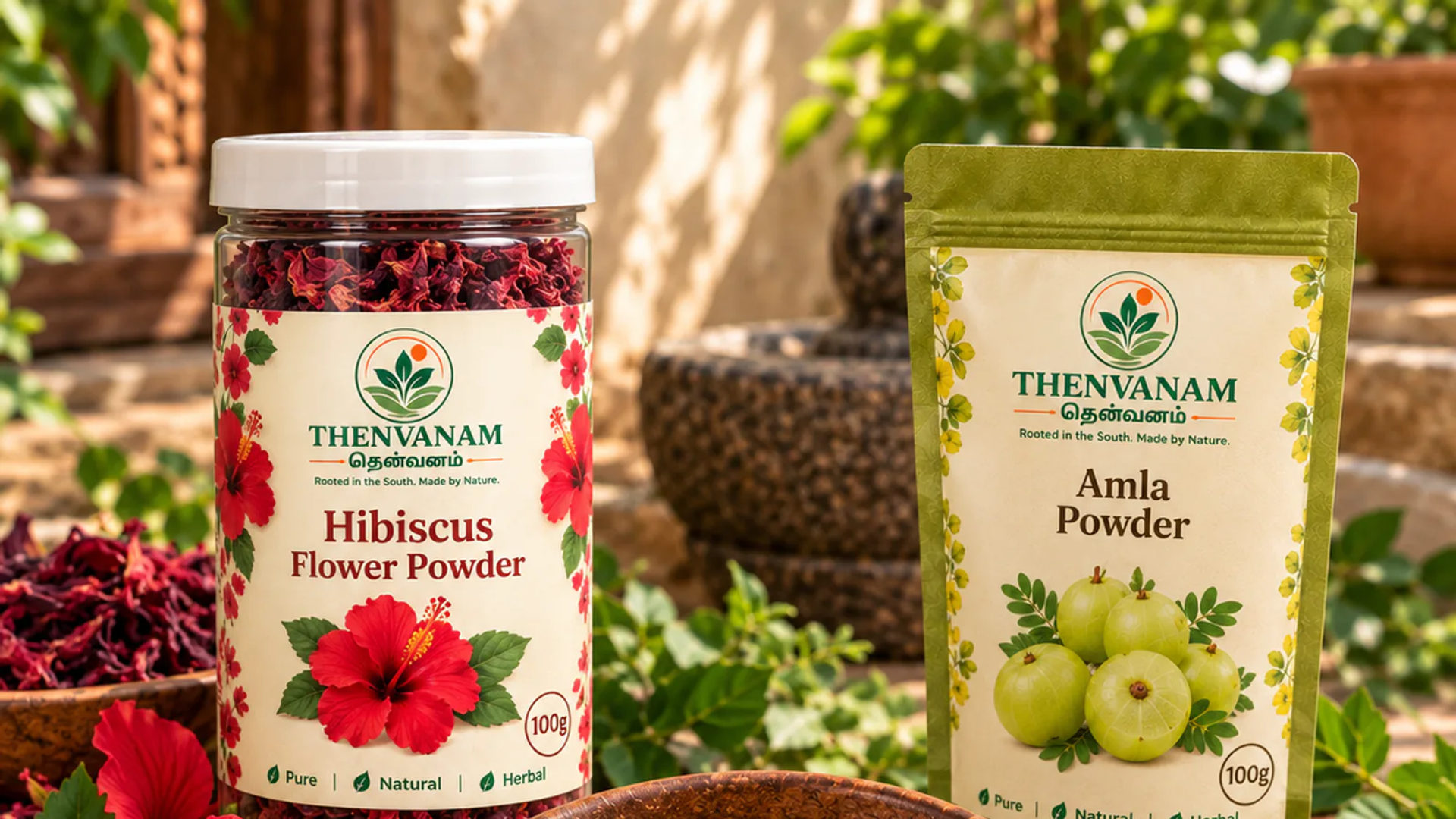
Hibiscus and Amla Hair Pack
Sembaruthi and nellikai, the two powders most often mixed into a traditional hair pack, with aloe vera gel as the base.
3 min read
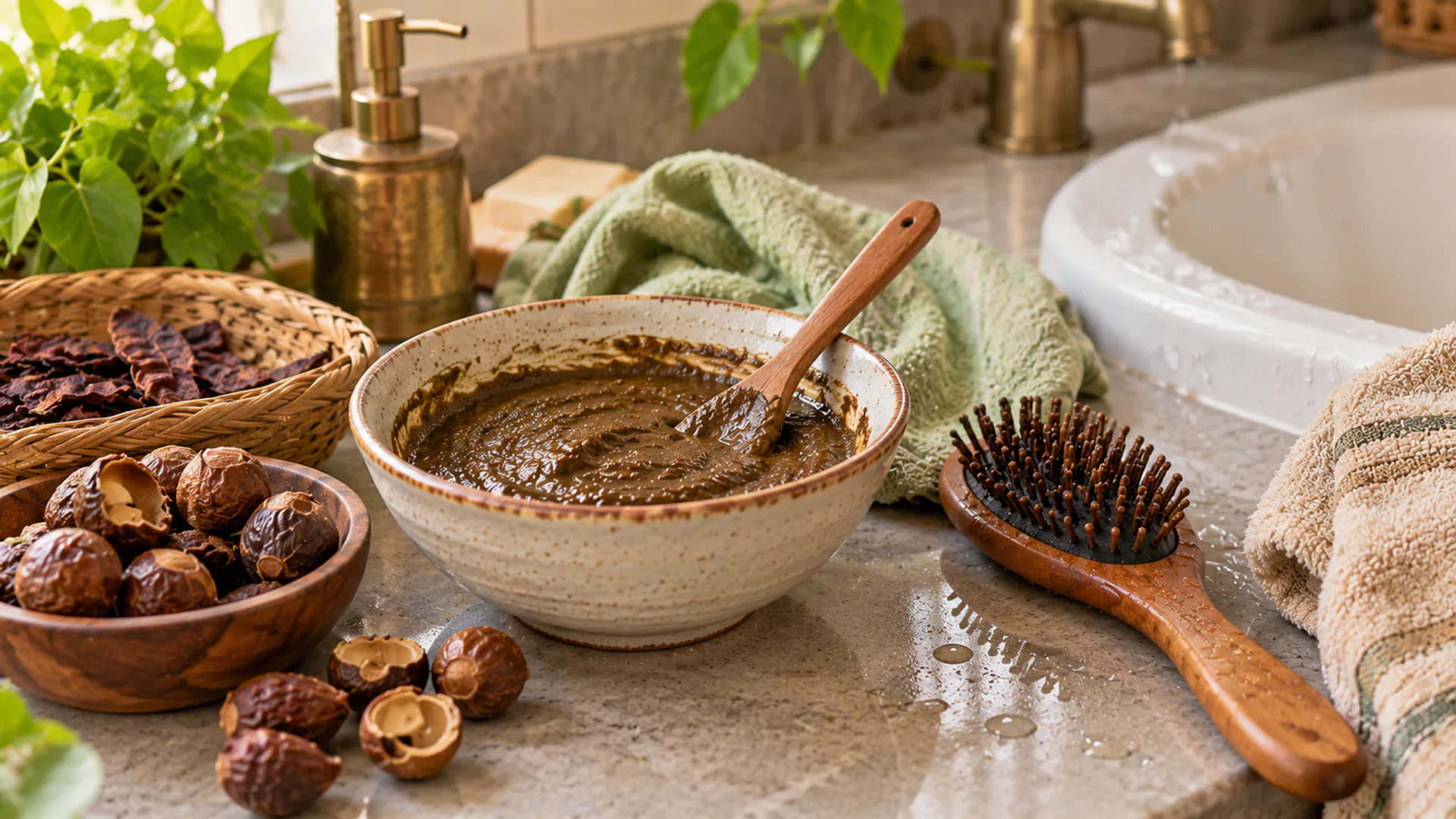
How to Wash Your Hair with Traditional Powders
A step-by-step walk through a traditional powder hair wash — how much to mix, how to apply it and how to rinse it out properly.
6 min read
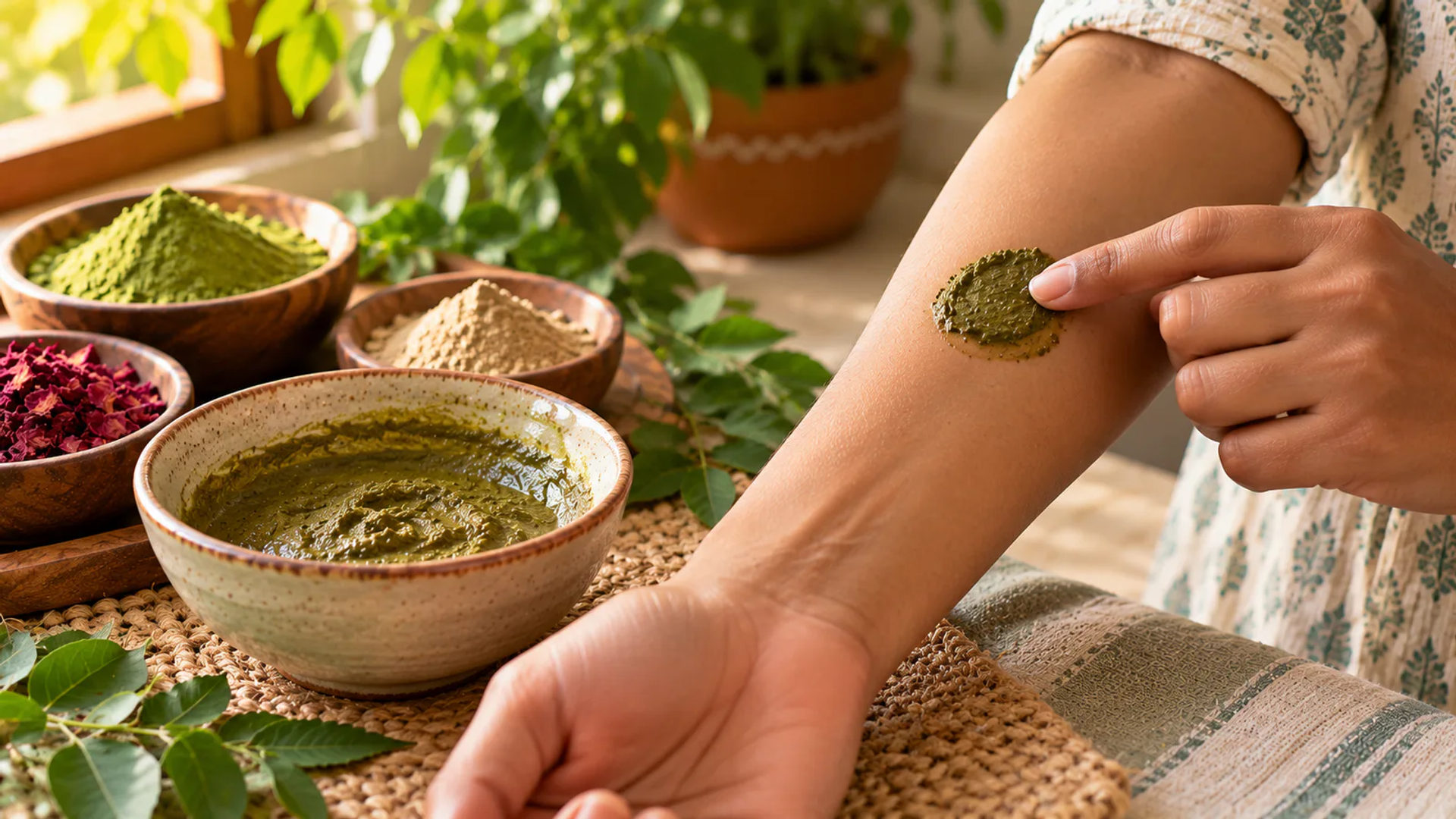
How to Patch Test a Botanical Powder
Four steps, done once per powder. The reason single-ingredient powders are worth buying is the same reason a patch test is straightforward.
4 min read